Zigbee Thermostat Solution for European Heating Systems
Zigbee thermostat solutions are widely adopted in European residential and light commercial heating projects where reliable wireless communication, zoned temperature control, and centralized system management are required.
Unlike standalone programmable thermostats, a Zigbee-based heating solution operates as a coordinated control network. Boiler thermostats, radiator valves (TRVs), room sensors, and gateways communicate through a Zigbee mesh network, enabling stable and scalable heating control across apartments, multi-room homes, hotels, and residential complexes.
As a manufacturer with long-term experience in Zigbee heating devices, we design thermostats not as isolated units, but as components within structured European heating control systems.
This page explains how a Zigbee thermostat solution works, what heating applications it supports, and how it is deployed in real-world European projects.
What Is a Zigbee Thermostat Solution?
A Zigbee thermostat solution is a wireless heating control system built around Zigbee communication technology.
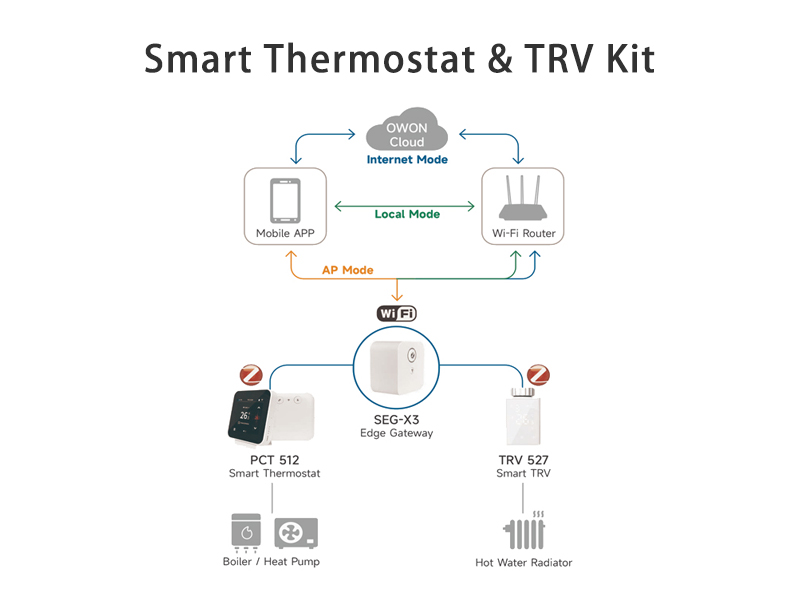
Instead of connecting each thermostat directly to the internet, Zigbee devices form a low-power mesh network. A Zigbee gateway coordinates communication between devices and optionally connects the system to a management platform for remote supervision.
A typical European Zigbee heating solution includes:
-
Zigbee boiler thermostat (for combi or system boilers)
-
Zigbee room thermostats
-
Zigbee radiator valves (TRVs)
-
Optional temperature or floor sensors
-
Zigbee gateway for centralized control
-
Heating equipment such as combi boilers, system boilers, underfloor heating systems, or radiator-based systems
This architecture ensures reliable multi-room coordination while maintaining system stability.
Why Zigbee Is Suitable for European Heating Control
Reliable Mesh Communication
European homes often require multiple heating control points across different rooms and floors. Zigbee mesh networking allows powered devices to relay signals, improving coverage and reducing communication failure risks.
This is particularly important in multi-room residential projects and hotel environments.
Designed for Zoned Heating
Zoned heating is common in Europe. Instead of heating the entire property uniformly, individual rooms are regulated independently.
A Zigbee heating solution enables:
-
Boiler coordination at system level
-
Individual radiator temperature control
-
Room-by-room scheduling
-
Energy optimization through coordinated logic
This supports both comfort and energy efficiency requirements.
Flexible Installation for Retrofit and New Builds
Zigbee wireless communication reduces wiring complexity, making it suitable for retrofit projects where running new cables is difficult.
For new residential developments, it provides scalable heating infrastructure with centralized management capability.
Typical Applications in European Heating Projects
Zigbee Boiler Thermostat for Combi and System Boilers
Zigbee boiler thermostats such as our PCT512 are widely used in European combi and system boiler installations. They provide:
-
Central heating scheduling
-
Domestic hot water management
-
Boost control
-
Away mode
-
Freeze protection
This ensures stable control of 230V boiler systems while enabling integration with room-level devices.
Zigbee Radiator Thermostat (TRV) Integration
Radiator-based heating remains dominant in many European homes.
Owon's Zigbee TRVs allow:
-
Independent room temperature regulation
-
Automatic valve adjustment
-
Zoned heating strategies
When combined with a Zigbee boiler thermostat and gateway, this forms a complete smart heating ecosystem.
Zigbee Underfloor Heating Control
Underfloor heating systems require precise temperature regulation.
Zigbee thermostats and floor sensors can manage electric or hydronic floor heating with stable control logic and programmable scheduling.
Multi-Room and Multi-Unit Residential Deployment
Zigbee heating systems can scale from a small apartment to large residential complexes.
Typical deployments include:
-
Apartment buildings
-
Student housing
-
Hotels
-
Social housing energy-saving programs
The mesh network structure supports expansion without increasing wiring complexity.
Zigbee 3.0 for Long-Term Interoperability
Modern European Zigbee heating systems are based on Zigbee 3.0, which improves interoperability across devices and vendors.
Zigbee 3.0 provides:
-
Simplified commissioning
-
Improved device compatibility
-
Better long-term support for professional installations
-
Integration flexibility for future expansion
For projects requiring long lifecycle stability, Zigbee 3.0 is an essential foundation.
Zigbee Heating System Architecture
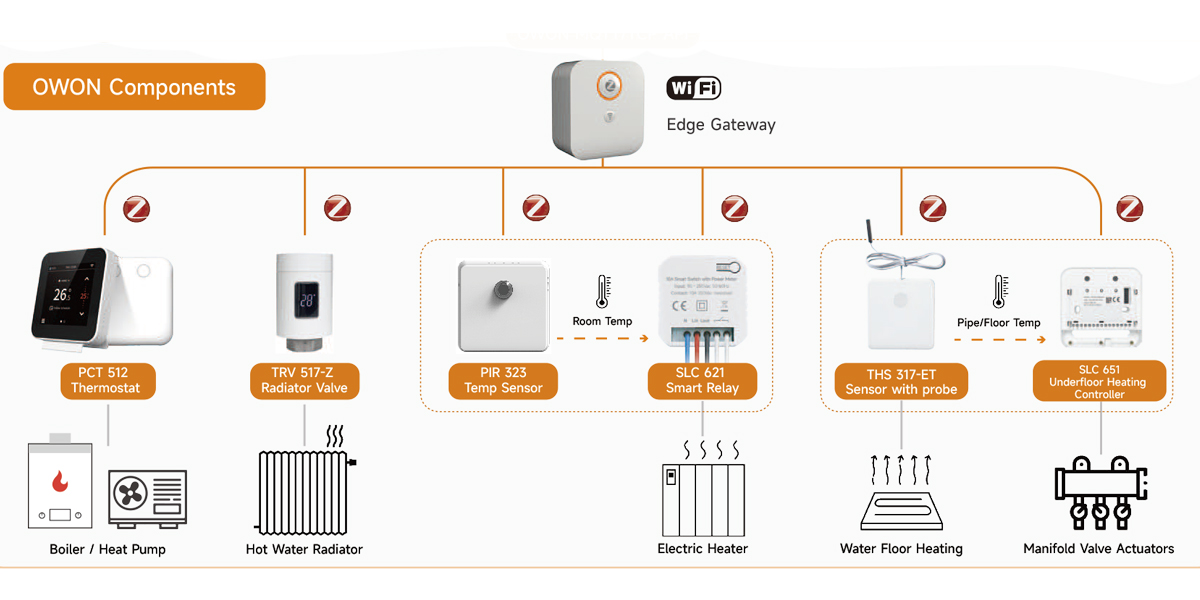
A professional European Zigbee heating solution typically follows a layered structure:
Device Layer
-
Boiler thermostat
-
Room thermostats
-
Radiator valves (TRVs)
-
Temperature and floor sensors
Control Layer
-
Zigbee gateway
-
Local coordination logic
-
Zone-based temperature management
Management Layer
-
Local access
-
Optional cloud-based remote monitoring
This layered architecture allows system integrators to configure heating logic according to project requirements.
Zigbee Heating Solutions Designed by OWON
At OWON, we develop Zigbee heating control devices specifically for European deployment scenarios.
Our portfolio supports:
-
Zigbee boiler thermostats
-
Zigbee room thermostats
-
Zigbee TRVs for radiator control
-
Zigbee gateways for centralized coordination
-
Integration within broader Zigbee heating ecosystems
By designing thermostats, valves, and gateways as part of a unified architecture, we support predictable heating control performance across European residential projects.
Deployment Considerations for Integrators
Professional heating projects typically evaluate:
-
Compatibility with 230V boiler systems
-
Long-term product availability
-
Stable firmware performance
-
Scalability for multi-room deployment
-
Gateway integration capability
Manufacturers with in-house Zigbee development and production capabilities are better positioned to support long-term European heating projects.
Frequently Asked Questions
Are Zigbee thermostat solutions suitable for large residential buildings?
Yes. Zigbee mesh networking allows stable communication across multiple rooms and floors, making it suitable for apartment buildings and hospitality environments.
Can Zigbee control both boiler heating and radiator valves?
Yes. Zigbee boiler thermostats coordinate with Zigbee TRVs to support zoned heating control.
Do Zigbee thermostats require internet access?
No. Basic heating control operates locally through a Zigbee gateway. Internet access is required only for remote management.
Is Zigbee suitable for retrofit heating installations?
Yes. Zigbee’s wireless architecture reduces wiring requirements, making it ideal for retrofit projects.
Next Step
If you are evaluating a Zigbee thermostat solution for a European heating project, understanding system architecture and deployment considerations early can significantly reduce implementation risk.
We support scalable Zigbee heating solutions designed for real-world European applications and long-term performance. Our team welcomes discussions regarding project requirements, integration planning, and deployment strategy.