Introduction: Why MQTT Matters in Modern Energy Metering
As smart energy systems become more interconnected, traditional cloud-only monitoring is no longer enough. Today’s residential and light commercial energy projects increasingly require local, real-time, and system-level data access—especially when integrating energy meters into platforms like Home Assistant, building energy management systems, or custom IoT architectures.
This shift is driving growing demand for smart energy meters with MQTT support. For solution providers and system designers, MQTT enables direct data exchange, flexible system integration, and long-term platform independence.
From our experience as a smart energy meter manufacturer, questions such as “Does this power meter support MQTT?” or “How can I integrate an energy meter with Home Assistant using MQTT?” are no longer advanced use cases—they are becoming standard requirements in modern energy projects.
What Is a Smart Energy Meter with MQTT?
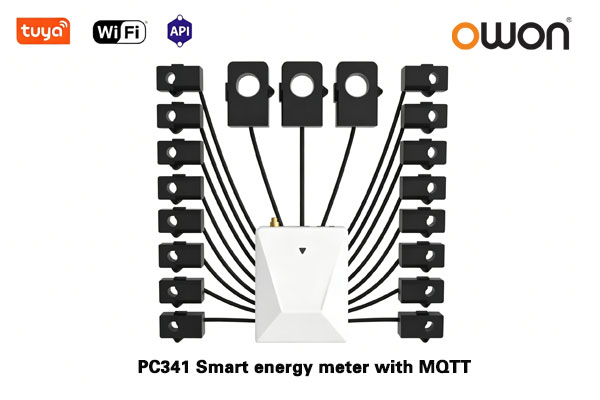
A smart energy meter with MQTT is an electricity meter capable of publishing real-time measurement data—such as power, energy, voltage, and current—directly to an MQTT broker. Instead of relying solely on proprietary cloud dashboards, MQTT enables energy data to be consumed by multiple systems simultaneously.
Key advantages include:
-
Local data availability without cloud dependency
-
Low-latency, lightweight communication
-
Easy integration with Home Assistant, EMS, and BMS platforms
-
Long-term flexibility for system expansion
This is why keywords like mqtt energy meter Home Assistant, energy meter WiFi MQTT, and smart energy meter MQTT increasingly appear in procurement-stage searches.
Why MQTT Is Preferred for Energy Monitoring Systems
Compared to traditional REST or cloud-only APIs, MQTT is particularly well suited for energy monitoring because it supports continuous data streaming and event-driven architectures.
In practical deployments, MQTT allows:
-
Real-time power data for automation triggers
-
Integration with Modbus gateways or edge controllers
-
Unified data flow across energy meters, inverters, and storage systems
For projects that require reliable feedback loops—such as load control, energy optimization, or anti-reverse power flow—MQTT often becomes a foundational communication layer.
MQTT and Home Assistant: A Natural Combination
Many users searching for mqtt energy meter Home Assistant are not looking for tutorials—they are evaluating whether a device fits into their system architecture.
Home Assistant natively supports MQTT, enabling:
-
Local energy dashboards
-
Power-based automation rules
-
Integration with solar, EV chargers, and smart loads
When a smart energy meter publishes standardized MQTT topics, it can be integrated into Home Assistant without locking the project into a single vendor ecosystem.
Smart Energy Meter MQTT Architecture: How It Works
In a typical setup:
-
The energy meter measures real-time electrical parameters using CT clamps.
-
Data is transmitted via WiFi or Zigbee to a local gateway or directly to the network.
-
Measurement values are published to an MQTT broker.
-
Home Assistant or other systems subscribe to the relevant topics.
This architecture allows scalable, vendor-neutral energy monitoring, which is increasingly preferred in professional smart energy deployments.
Owon’s PC321 Smart Energy Meter with MQTT Support
To meet these integration requirements, the PC321 smart energy meter is designed to support MQTT-based energy data delivery in both WiFi and Zigbee communication variants.
From a system design perspective, PC321 provides:
-
Accurate CT-based power and energy measurement
-
Real-time data suitable for MQTT publishing
-
Support for grid import/export monitoring
-
Compatibility with Home Assistant and custom IoT platforms
Whether deployed as a WiFi energy meter MQTT solution or as part of a Zigbee-based energy network, PC321 enables consistent data access across different system architectures.

WiFi vs Zigbee: Choosing the Right Communication Layer for MQTT
Both WiFi and Zigbee can coexist with MQTT-based energy systems, but each serves different deployment needs.
-
WiFi energy meter MQTT setups are ideal for standalone residential projects or direct LAN integration.
-
Zigbee energy meters are often preferred in distributed sensor networks or when combined with Zigbee gateways that bridge data to MQTT.
By offering both communication options, PC321 allows system designers to choose the topology that best fits their project constraints without changing the core energy metering hardware.
Practical Applications of MQTT-Based Energy Metering
Smart energy meters with MQTT are commonly used in:
-
Home Assistant–based smart homes
-
Residential solar and energy storage systems
-
Local energy management dashboards
-
Edge-controlled automation and load optimization
-
Projects requiring Modbus-to-MQTT data unification
In all these scenarios, MQTT serves as a reliable backbone for real-time energy data exchange.
Considerations for System Designers and Integrators
When selecting an MQTT-capable energy meter, decision-makers should evaluate:
-
Measurement accuracy across load ranges
-
Stability of MQTT data publishing
-
Communication reliability (WiFi or Zigbee)
-
Long-term firmware and protocol support
As a manufacturer, we design energy meters like PC321 to ensure protocol stability, accurate measurement, and integration flexibility, allowing system integrators to build scalable solutions without redesigning their architecture.
Conclusion
A smart energy meter with MQTT is no longer a niche requirement—it is a core component of modern energy monitoring and automation systems. By enabling local, real-time, and system-independent data access, MQTT-based energy metering supports smarter decisions, better automation, and long-term project scalability.
For solution providers and system designers, choosing an energy meter designed with MQTT integration in mind ensures that energy data remains accessible, actionable, and future-proof.
If you are evaluating MQTT-capable energy meters for Home Assistant or custom IoT energy projects, understanding the communication architecture at the device level is the first step toward a reliable deployment.
Related reading:
[Zero Export Metering: The Critical Bridge Between Solar Power and Grid Stability]
Post time: Jan-15-2026