A Zigbee2MQTT dimmer is a Zigbee lighting control device that can be integrated with Zigbee2MQTT for local smart lighting control. Depending on the device, it may control functions such as turning lights on or off, adjusting brightness, or changing color temperature.
For Home Assistant users and smart building integrators, a Zigbee2MQTT dimmer can provide a flexible alternative to lighting devices that depend entirely on proprietary cloud platforms.
But how does it actually work, and what should you know before choosing one?
How Does a Zigbee2MQTT Dimmer Work?
A Zigbee dimmer communicates wirelessly using the Zigbee protocol. Instead of connecting directly to Wi-Fi, it joins a Zigbee network through a compatible coordinator or gateway.
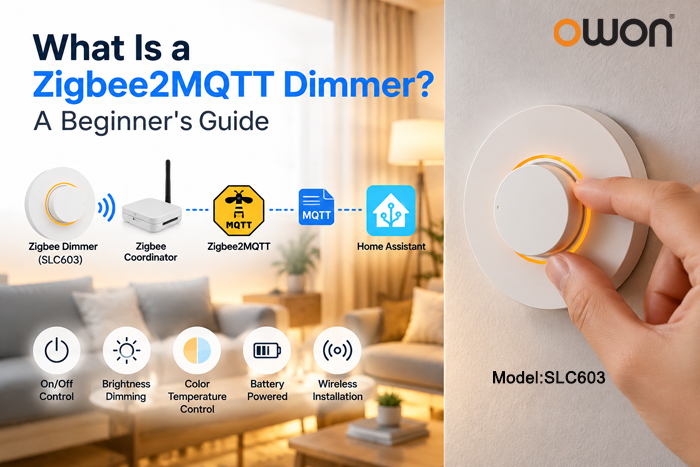
When used with Zigbee2MQTT, the basic communication path typically looks like this:
Zigbee Dimmer → Zigbee Coordinator → Zigbee2MQTT → MQTT → Home Automation Platform
Zigbee2MQTT acts as a bridge between Zigbee devices and MQTT-based systems. This makes it possible to integrate supported lighting devices into platforms such as Home Assistant without depending entirely on a manufacturer’s cloud service.
A Zigbee2MQTT dimmer may therefore become part of a larger local automation system involving lights, sensors, switches, and other Zigbee devices.
What Can a Zigbee2MQTT Dimmer Control?
Capabilities vary by product.
A basic dimmer may provide only:
- Light on/off control
- Brightness adjustment
More advanced devices may also support:
- Color temperature control
- Lighting scenes
- Automation
- Group control
- Device binding
For example, a dimmer with brightness and color temperature control can allow users to change a room from bright cool-white task lighting to warmer, softer lighting in the evening.
This makes dimmers useful for bedrooms, living areas, hotel rooms, apartments, offices, and other smart lighting environments.
Zigbee2MQTT Dimmer vs. Regular Zigbee Dimmer
The physical device may still use standard Zigbee communication. The important difference is whether the device is supported by Zigbee2MQTT and what functions Zigbee2MQTT exposes.
A compatible Zigbee2MQTT dimmer switch can potentially be integrated into a more open local smart home or building automation environment.
This can provide several advantages:
Local control: Lighting automations can operate within the local system rather than relying entirely on a cloud service.
Home Assistant integration: Zigbee2MQTT is commonly used to connect supported Zigbee devices with Home Assistant.
Multi-brand environments: A Zigbee network can contain compatible devices from different manufacturers.
Flexible automation: A dimmer can work alongside motion sensors, door sensors, temperature sensors, smart plugs, and other devices.
However, Zigbee compatibility alone does not automatically mean that every device works with Zigbee2MQTT. Device support should always be checked before selection.
Wireless Dimmer vs. In-Wall Dimmer
One important consideration is installation type.
A wireless Zigbee dimmer is often battery powered and can be positioned where convenient without adding mains wiring. This makes it particularly useful for retrofit projects, apartments, hotel renovations, or locations where running new wiring is difficult.
An in-wall dimmer, by comparison, is normally connected to mains power and permanently installed into a wall box.
Neither design is universally better. The right choice depends on whether the project prioritizes flexible installation or permanent wall-mounted control.
Example of a Zigbee2MQTT Dimmer
For example, the OWON SLC603 is a battery-powered Zigbee dimmer switch designed for wireless smart lighting control.
It supports light on/off control, brightness adjustment, and color temperature adjustment. Because it does not require additional wall wiring, it is particularly useful for retrofit lighting projects, apartments, hotels, and smart building applications.
For projects using Zigbee2MQTT and Home Assistant, a compatible wireless dimmer such as the SLC603 can provide a physical lighting control interface while remaining part of a wider local automation system.
What Should You Look for in a Zigbee2MQTT Dimmer?
Before selecting a dimmer, check more than just whether the product uses Zigbee.
Consider:
| Feature | Why It Matters |
|---|---|
| Zigbee2MQTT support | Determines whether the device can be integrated as intended |
| Dimming control | Allows brightness adjustment |
| CCT control | Allows adjustment between warm and cool white lighting |
| Installation type | Choose wireless/battery or permanently wired designs |
| Home Assistant support | Useful for local smart home automation |
| Battery or mains power | Affects installation and maintenance |
| Gateway requirements | Determines the overall system architecture |
For larger projects, OEM/ODM availability, device management, gateway compatibility, and integration requirements may also be important.
Where Are Zigbee2MQTT Dimmers Used?
A Zigbee2MQTT dimmer can be useful anywhere flexible lighting control and local automation are required.
In a smart home, it can provide convenient physical control alongside Home Assistant automations. In apartments and retrofit projects, wireless models can add smart lighting controls without extensive rewiring. Hotels can use Zigbee lighting controls as part of room automation, while offices and smart buildings can integrate lighting with occupancy sensors and other building devices.
The value is not simply the ability to dim a lamp. It is the ability to make lighting part of a broader Zigbee automation system.
FAQ
What is a Zigbee2MQTT dimmer?
A Zigbee2MQTT dimmer is a compatible Zigbee lighting control device that can be integrated through Zigbee2MQTT for functions such as on/off control, brightness adjustment, and, on supported devices, color temperature control.
Does every Zigbee dimmer work with Zigbee2MQTT?
No. Zigbee compatibility does not automatically guarantee Zigbee2MQTT support. Always check whether the specific device and its required functions are supported.
Can a Zigbee2MQTT dimmer work with Home Assistant?
Supported Zigbee2MQTT dimmers can be integrated into Home Assistant through a Zigbee2MQTT setup, allowing lighting controls to participate in local automations and scenes.
Does a Zigbee2MQTT dimmer need a gateway?
It requires a compatible Zigbee coordinator or gateway architecture to communicate with Zigbee2MQTT. It does not normally connect directly to a Wi-Fi router like a Wi-Fi dimmer.
Can a Zigbee2MQTT dimmer control color temperature?
Some models can. The exact capabilities depend on the dimmer and the lighting devices being controlled. For example, the SLC603 supports brightness and color temperature control.
Conclusion
A Zigbee2MQTT dimmer combines physical lighting control with the flexibility of a Zigbee2MQTT-based automation system. Depending on the device, users can control on/off status, brightness, color temperature, scenes, and other lighting functions while integrating the dimmer with Home Assistant and other local automation components.
For retrofit applications, a battery-powered wireless model can be especially useful because it adds physical lighting control without requiring additional wall wiring.
When choosing a Zigbee2MQTT dimmer switch, focus on actual device support, lighting functions, installation type, power source, and compatibility with the rest of your Zigbee system.
Post time: Sep-29-2026


