Choosing the right commercial HVAC thermostat is essential for maintaining comfort, improving energy efficiency, and optimizing system performance in modern buildings. From office spaces to hotels and apartment complexes, commercial HVAC systems require reliable and scalable thermostat solutions.
In this guide, we explore how thermostats are used in commercial HVAC systems, key features to consider, and how modern WiFi thermostats can support smart building integration.
Commercial HVAC Thermostat
A commercial HVAC thermostat is designed to control heating, ventilation, and air conditioning systems in larger or multi-zone environments. Unlike residential thermostats, commercial solutions must support higher reliability, flexible scheduling, remote management, and system scalability.
In commercial buildings, temperature control is not only about comfort. It also affects energy consumption, tenant satisfaction, equipment lifespan, and operating costs. This makes thermostat selection an important decision for HVAC contractors, system integrators, property managers, and building owners.
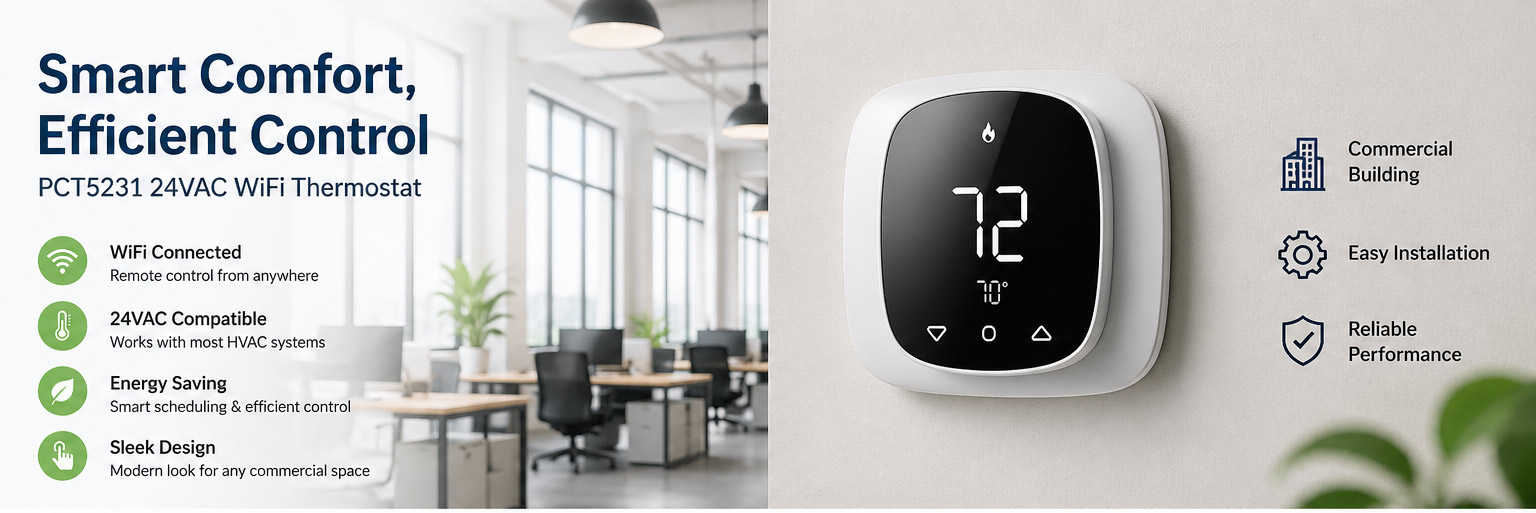
Thermostat for Commercial Building Applications
A thermostat for commercial building applications must adapt to different operating conditions. For example, an office building may require weekday scheduling, while a hotel may require room-level control based on occupancy. Apartment buildings may need scalable thermostat deployment across many units, while retail spaces need consistent comfort during business hours.
Common commercial applications include:
- Office buildings
- Hotels and hospitality projects
- Apartment complexes
- Retail stores
- Light commercial facilities
- Mixed-use buildings
Each project may require different control strategies, such as scheduled temperature control, remote monitoring, occupancy-based adjustment, or zone-specific regulation.
Key Features of Commercial HVAC Thermostat Solutions
When selecting a commercial HVAC thermostat, several features are especially important.
Multi-Zone Control
Commercial buildings often include multiple spaces with different comfort requirements. A thermostat solution that supports remote sensors or zoning strategies can help reduce hot and cold spots while improving comfort.
Remote Management
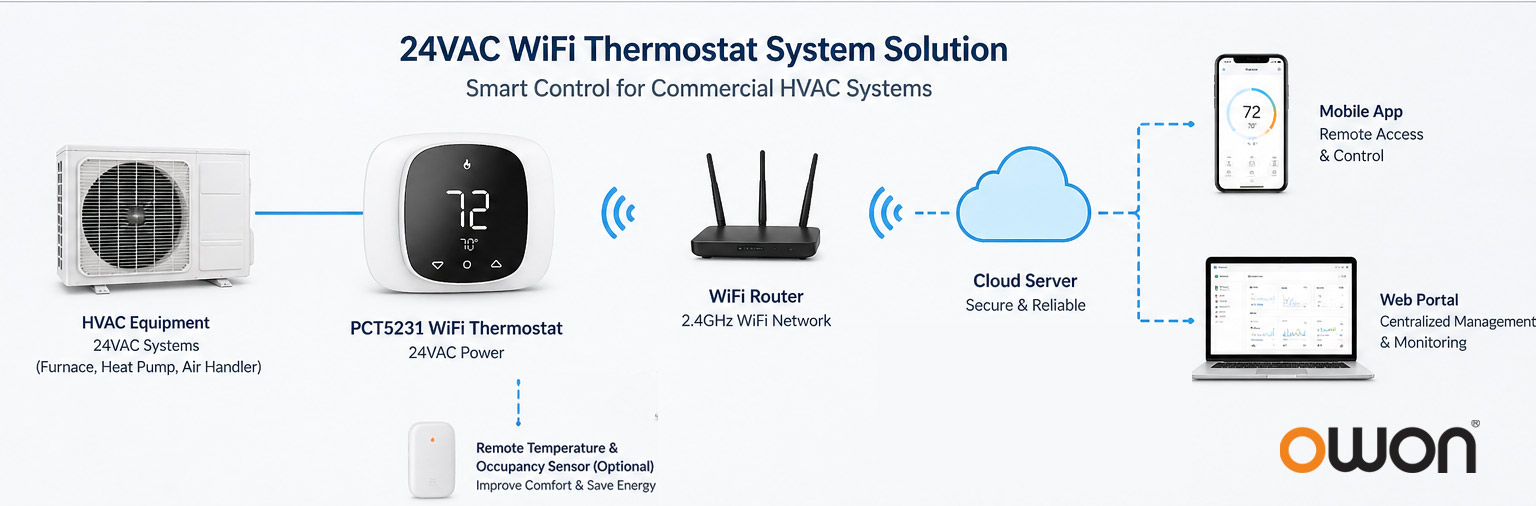
Facility managers and service providers often need to monitor or adjust HVAC settings without visiting each room. WiFi-based thermostats make remote control easier through mobile apps or cloud platforms.
Energy Optimization
Commercial HVAC systems consume a large share of building energy. Smart scheduling, temperature limits, fan control, and automation can help reduce waste during unoccupied hours.
Occupancy-Based Control
Occupancy sensing can help adjust comfort settings based on actual room usage. This is especially useful in hotels, apartments, offices, and meeting rooms.
HVAC System Compatibility
For North American projects, 24VAC compatibility is important. A suitable thermostat should support common HVAC equipment such as furnaces, heat pumps, air conditioners, and multi-stage systems.
How WiFi Thermostats Improve Commercial HVAC Systems
Modern WiFi thermostats bring significant advantages to commercial environments. They allow real-time remote control, centralized monitoring, and easier deployment in retrofit projects.
For existing buildings, WiFi thermostats can reduce wiring complexity compared with traditional wired control systems. They are also suitable for projects where facility managers want cloud access, app control, or integration with a broader smart building platform.
For example,Owon’s 24VAC WiFi thermostats with remote sensor support can help balance temperature across different areas while maintaining compatibility with standard HVAC systems.
Commercial HVAC Thermostat vs Residential Thermostat
| Feature | Commercial Thermostat | Residential Thermostat |
|---|---|---|
| Control Scope | Multi-room or multi-zone | Usually single-zone |
| Management | Remote or centralized | Mostly individual control |
| Integration | BMS / IoT / cloud platform | Smart home apps |
| Scheduling | Business-hour or occupancy-based | Home lifestyle schedule |
| Scalability | Built for multiple units | Limited project scalability |
This comparison highlights why commercial projects require more advanced planning than typical home installations.
Choosing the Right Thermostat for Commercial Building Projects
Selecting the right thermostat for commercial building projects depends on several factors:
- HVAC system type
- Number of rooms or zones
- Need for remote sensors
- Wiring condition
- Cloud or BMS integration needs
- Energy-saving goals
- Project scale and maintenance requirements
For retrofit projects, WiFi thermostats with flexible wiring and C-wire adapter support can reduce installation complexity. For new projects, system integrators may focus more on API integration, centralized control, and long-term product availability.
Applications in Commercial HVAC Projects
Office Buildings
Office spaces require stable comfort during working hours and energy savings after hours. Smart schedules can reduce unnecessary HVAC operation.
Hotels
Hotels need guest comfort while also reducing energy waste in vacant rooms. Thermostats with occupancy-based features can support better room-level control.
Apartments
Apartment projects often require scalable deployment across many units. WiFi thermostats can simplify control and maintenance for property managers.
Retail Spaces
Retail environments need consistent indoor comfort to improve customer experience and protect equipment or merchandise.
Integration with Smart Building Systems
A modern thermostat can become part of a larger smart building ecosystem. Integration with cloud platforms, IoT systems, or building management dashboards allows operators to monitor energy usage, adjust settings, and manage multiple rooms more efficiently.
For OEM brands, HVAC equipment providers, and system integrators, choosing a thermostat with reliable hardware, flexible features, and long-term supply support can improve project success.
Conclusion
A reliable commercial HVAC thermostat is essential for efficient building operation. With the rise of smart buildings, WiFi-enabled thermostats provide flexible, scalable, and cost-effective solutions for commercial HVAC systems.
For HVAC contractors, system integrators, property managers, and building owners, the right thermostat can improve comfort, reduce energy costs, simplify maintenance, and support future smart building integration.
Post time: Apr-25-2026