As the smart building and home automation market continues to expand, more distributors are looking beyond retail smart devices and searching for long-term OEM partnerships instead.
For companies planning to build their own smart device brand, choosing the right OEM Zigbee sensor supplier is becoming a critical business decision.
Why?
Because modern customers no longer want standalone smart devices. They expect complete ecosystems that combine automation, HVAC control, security monitoring, environmental sensing, and energy management into one connected platform.
That shift is creating strong demand for reliable Zigbee sensor manufacturers capable of supporting scalable and interoperable IoT deployments.
Today, Zigbee sensors are widely used in:
- • smart homes
- • hotel automation
- • HVAC energy management
- • elderly care systems
- • commercial buildings
- • smart apartments
- • utility-driven energy projects
As interoperability becomes increasingly important in IoT deployments, many distributors now prioritize Zigbee 3.0 compatible devices that support open integration platforms such as Home Assistant and Zigbee2MQTT.
Why More Distributors Are Choosing OEM Zigbee Sensors
Traditional retail sourcing may work for small projects, but it often creates limitations for distributors trying to scale.
Retail brands usually offer:
- • limited customization
- • closed ecosystems
- • unstable product availability
- • restricted branding flexibility
OEM partnerships solve many of these problems.
Instead of reselling another company’s brand, distributors can create their own Zigbee sensor portfolio with customized branding, packaging, firmware, and ecosystem compatibility.
This approach is becoming increasingly important in industries where long-term scalability and flexible integration matter.
Compared with traditional wireless systems, Zigbee remains attractive because of its:
- • low power consumption
- • mesh networking capability
- • stable wireless communication
- • interoperability support
- • multi-device scalability
For distributors and system integrators, these advantages help reduce deployment risks and improve long-term maintainability.
Manufacturers with experience in smart HVAC systems, wireless BMS platforms, and commercial IoT deployments are often better positioned to support long-term projects rather than simply supplying standalone devices.
Why Zigbee Remains One of the Most Popular IoT Protocols
Compared with many wireless communication protocols, Zigbee continues to play a major role in smart sensor deployments worldwide.
Low Power Consumption
Battery-powered Zigbee motion sensors, door sensors, and temperature sensors can often operate for years without frequent maintenance.
This is particularly important in hotels, commercial buildings, and large residential projects where battery replacement costs can become significant over time.
Mesh Networking
Zigbee devices automatically extend network coverage through mesh communication, making them highly suitable for apartments, offices, hotels, and multi-floor commercial environments.
Compared with point-to-point wireless systems, Zigbee mesh networks provide better scalability and stronger reliability for large deployments.
Open Ecosystem Compatibility
More customers today prefer Zigbee sensors compatible with:
- Home Assistant
- Zigbee2MQTT
- private MQTT platforms
- smart building management systems
- local gateway integration
This flexibility reduces dependence on closed ecosystems and gives distributors more freedom to support different customer requirements.
Scalable Multi-Application Deployment
The same Zigbee infrastructure can support:
- • HVAC control
- • lighting automation
- • occupancy monitoring
- • energy management
- • environmental sensing
- • security monitoring
This allows distributors to expand into multiple industries without rebuilding their entire product ecosystem.
What Distributors Actually Need from an OEM Zigbee Sensor Supplier
Pricing matters, but experienced distributors usually care more about long-term scalability and technical flexibility.
A reliable Zigbee sensor manufacturer should support:
- • OEM and private label services
- • low MOQ flexibility
- • stable firmware maintenance
- • API integration capability
- • long-term product supply
- • Zigbee 3.0 interoperability
- • gateway compatibility
- • cloud integration options
For many projects, compatibility with MQTT API, Home Assistant, or Zigbee2MQTT has become just as important as the hardware itself.
This is especially true for system integrators, smart building platform providers, and HVAC automation companies.
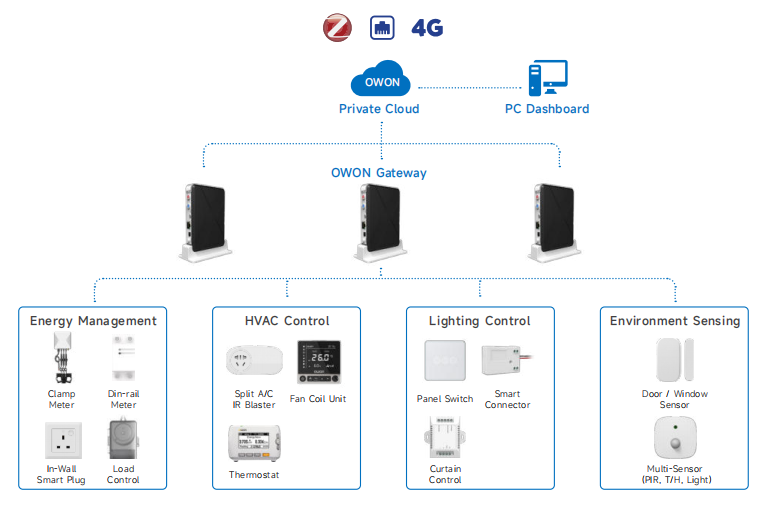
Some distributors also prefer suppliers that can provide broader IoT ecosystems beyond sensors, including:
- • smart thermostats
- • smart relays
- • power meters
- • gateways
- • occupancy sensors
- • hotel automation devices
This creates a more scalable long-term business structure.
Suppliers with experience in wireless BMS systems, smart HVAC control, hotel automation, and energy management projects are often more capable of supporting evolving commercial IoT requirements.
Which Zigbee Sensors Are Most In Demand Today?
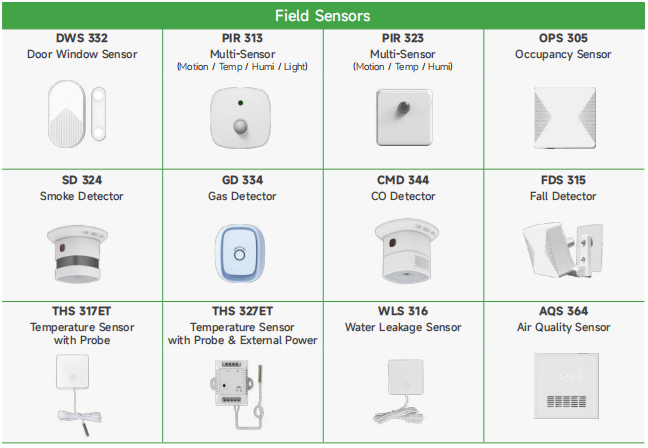
Different markets require different types of Zigbee smart sensors, but several categories consistently show strong demand worldwide.
Popular Zigbee Sensor Categories for Different Applications
| Sensor Type | Typical Applications | Main Buyer Groups |
|---|---|---|
| Zigbee Motion Sensor | Smart lighting, HVAC automation, occupancy detection | System integrators, smart building projects |
| Zigbee Door Sensor | Security alerts, hotel room management, HVAC shutdown logic | Hotel automation providers, property managers |
| Zigbee Temperature Sensor | HVAC monitoring, energy optimization, environmental sensing | HVAC contractors, energy management companies |
| Zigbee Water Leak Sensor | Leak prevention, facility protection | Smart home distributors, commercial projects |
| Zigbee Occupancy Sensor | Office utilization, lighting control, energy saving | Commercial building integrators |
| Zigbee Fall Detection Sensor | Elderly care and healthcare monitoring | Healthcare solution providers |
Zigbee Motion & Occupancy Sensors
These sensors are widely used in:
- • smart lighting automation
- • office occupancy detection
- • HVAC energy-saving systems
- • hotel room management
Advanced occupancy sensors are increasingly replacing traditional PIR-only solutions because they improve energy efficiency and reduce false triggers.
In smart hotel and commercial building projects, occupancy sensors are often integrated with thermostats, relays, and HVAC systems to reduce unnecessary energy consumption while improving user comfort.
Zigbee Door & Window Sensors
Zigbee door sensors are commonly used for:
- • intrusion alerts
- • smart HVAC shutdown logic
- • guest room management
- • smart apartment systems
Tamper-resistant door/window sensors are becoming especially important in hospitality projects and commercial deployments.
In hotel automation projects, door/window sensors are frequently linked with HVAC control systems and occupancy logic to improve operational efficiency and reduce energy waste.
Zigbee Temperature & Humidity Sensors
Environmental monitoring is becoming essential in:
- • HVAC systems
- • smart buildings
- • energy optimization projects
- • residential heating systems
- • server room monitoring
Some industrial and HVAC applications also require external temperature probes for floor heating, pipe monitoring, or equipment protection.
Distributors increasingly prefer suppliers capable of supporting broader HVAC ecosystems that combine temperature sensors, smart thermostats, occupancy sensors, and gateway integration into one unified solution.
Zigbee Safety Sensors
Safety-focused deployments increasingly use:
- • water leakage sensors
- • gas detectors
- • smoke detectors
- • fall detection sensors
These products are widely deployed in elderly care systems, smart hotels, healthcare projects, and commercial facilities.
As elderly care and remote monitoring applications continue growing, demand for fall detection sensors and environmental monitoring devices is also increasing rapidly.
Why Open Integration Matters More Than Ever
One major trend in the IoT market is the growing preference for open systems.
More customers now ask whether devices support:
- • Zigbee2MQTT
- • Home Assistant
- • MQTT API
- • local API integration
- • third-party gateways
This changes the role of distributors.
You are no longer simply selling hardware.
You are helping customers build flexible smart ecosystems that can evolve over time.
Open integration also makes it easier for system integrators to combine Zigbee sensors with:
- • HVAC systems
- • smart thermostats
- • power meters
- • smart relays
- • cloud platforms
- • building management systems
This flexibility is becoming increasingly valuable in commercial projects.
OWON, for example, provides Zigbee devices, gateways, and MQTT API integration capabilities that help system integrators build flexible smart building, HVAC automation, hotel management, and energy management systems.
Manufacturers that already have experience with gateway APIs, wireless BMS systems, HVAC integration, and smart energy management platforms are generally better prepared to support complex IoT deployments.
Why Zigbee Sensors Continue to Gain Market Share
Growing demand for smart energy management, wireless HVAC control, hotel automation, and open IoT ecosystems continues to drive Zigbee adoption worldwide.
Compared with many proprietary wireless systems, Zigbee offers:
- • lower deployment cost
- • better interoperability
- • easier large-scale integration
- • stronger ecosystem flexibility
- • reliable low-power communication
These advantages are particularly important for distributors and system integrators building scalable IoT solutions across different industries.
As smart building projects continue to expand, Zigbee sensors are expected to remain one of the most widely adopted wireless device categories in the IoT industry.
At the same time, more commercial projects are shifting from standalone smart devices toward fully integrated IoT ecosystems that combine sensing, HVAC control, energy management, and cloud-based automation.
OEM Is About More Than Branding
Many people assume OEM simply means printing a logo on existing products.
In reality, successful OEM partnerships allow distributors to:
- • create differentiated product portfolios
- • control pricing strategy
- • develop long-term customer relationships
- • build their own market reputation
- • expand into multiple vertical industries
Over time, this creates significantly more business value than competing only on low prices.
For distributors targeting long-term growth, OEM partnerships are increasingly becoming a strategic business model rather than simply a sourcing method.
This is why many distributors now prefer working with IoT manufacturers capable of supporting not only Zigbee sensors, but also complete smart building and energy management ecosystems.
FAQ
What is the difference between OEM and ODM Zigbee devices?
OEM Zigbee devices are typically based on existing hardware platforms with customized branding, packaging, or firmware. ODM projects involve deeper hardware or software customization designed specifically for a customer’s requirements.
Are Zigbee sensors compatible with Home Assistant?
Many Zigbee 3.0 sensors can work with Home Assistant through platforms such as Zigbee2MQTT or compatible Zigbee gateways. Compatibility depends on the device firmware and integration protocol.
Why do distributors prefer Zigbee sensors for smart building projects?
Zigbee sensors offer low power consumption, mesh networking, stable wireless communication, and flexible integration options, making them suitable for smart homes, hotels, HVAC systems, and commercial buildings.
What Zigbee sensors are most commonly used in hotel automation?
Hotel automation projects commonly use Zigbee occupancy sensors, door/window sensors, temperature sensors, smart relays, and HVAC control devices to improve energy efficiency and guest comfort.
What should distributors look for in an OEM Zigbee sensor supplier?
Distributors should evaluate product stability, Zigbee 3.0 compatibility, API support, OEM flexibility, long-term supply capability, and integration support for platforms like MQTT and Home Assistant.
Conclusion
The global demand for Zigbee smart sensors continues to grow across smart homes, hotels, HVAC systems, energy management, and commercial building automation.
For distributors, choosing the right OEM Zigbee sensor supplier is not just about sourcing products.
It is about finding a long-term technology partner capable of supporting scalable business growth.
Reliable Zigbee sensor manufacturers should provide:
- stable product supply
- flexible OEM capability
- open ecosystem compatibility
- integration support
- scalable product categories
- long-term firmware and platform support
For commercial IoT projects, suppliers with experience in smart HVAC control, wireless BMS systems, hotel automation, energy management, and gateway integration are often better equipped to support evolving market demands.
For distributors seeking long-term growth in the smart building and IoT industry, working with experienced manufacturers such as OWON can help reduce deployment risks and improve project scalability.
With experience in Zigbee sensors, smart HVAC control, wireless BMS systems, hotel automation, and energy management solutions, OWON continues supporting global partners with flexible OEM and ODM IoT solutions.
Related reading:
[Smart Hotel Automation System with Zigbee IoT for Scalable Hospitality Control]
Post time: May-14-2026