Many older homes in North America still use simple 2-wire HVAC control systems. While these systems were originally designed for basic heating control, homeowners today increasingly want smarter temperature management, remote access, and energy-saving features.
One common challenge is that many modern smart thermostats require a C wire for continuous power. Older homes often do not have this wiring available, creating confusion for homeowners looking to upgrade their HVAC control system.
Fortunately, modern HVAC technology now offers several practical solutions for installing a 2-wire smart thermostat without replacing the entire HVAC system.
What Is a 2-Wire Smart Thermostat
A 2-wire smart thermostat is designed for HVAC systems that only use two control wires, typically found in older heating systems.
In many North American homes, especially older properties, the original thermostat wiring was designed only for:
- Heating control
- Basic on/off operation
- Simple low-voltage HVAC systems
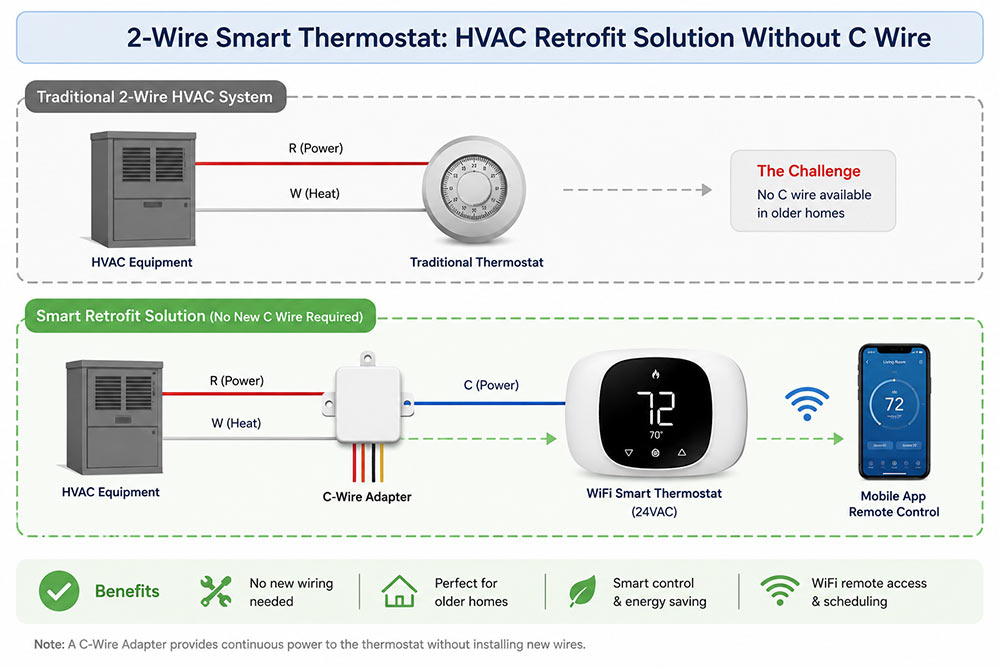
These systems often lack a dedicated common wire (C wire), which many modern WiFi thermostats use for continuous power.
Why Older Homes Often Lack a C Wire
Traditional thermostats did not require constant power because they operated mechanically or used batteries. As a result, many older HVAC installations only included two wires.
Today’s smart HVAC control systems support features such as:
- WiFi connectivity
- Mobile app control
- Touchscreen displays
- Energy usage monitoring
- Remote sensors
These advanced functions require more stable power than older thermostats.
This is why many homeowners search for:
- smart thermostat without c wire
- wifi thermostat no c wire
- 2-wire smart thermostat solutions
Can a Smart Thermostat Work Without a C Wire
Yes. Several modern HVAC solutions now support installation without traditional C-wire setups.
Common approaches include:
C-Wire Adapters
A smart thermostat c wire adapter can provide stable power without installing new wiring throughout the home.
This is one of the most practical upgrade options for:
- Older homes
- Apartment retrofit projects
- Existing HVAC installations
Battery-Assisted Smart Thermostats
Some smart thermostats use internal battery systems combined with HVAC power management technology to reduce dependency on dedicated C wires.
HVAC Retrofit Solutions
Many modern HVAC retrofit solutions are specifically designed for older North American homes where replacing thermostat wiring would be expensive or difficult.
Benefits of Upgrading to a Smart HVAC Control System
Even in homes with older wiring, upgrading HVAC control can provide several important benefits.
Improved Energy Efficiency
Smart scheduling and remote management can reduce unnecessary heating and cooling runtime.
Remote Temperature Control
WiFi-connected HVAC systems allow users to control indoor comfort remotely through mobile applications.
Better Comfort Management
Modern HVAC control solutions can support remote sensors and more balanced indoor temperature management.
Easier HVAC Monitoring
Energy reports and system alerts help homeowners better understand HVAC performance and maintenance needs.
HVAC Compatibility Matters
When selecting a 2-wire smart thermostat, HVAC compatibility is extremely important.
North American homes may use:
- Furnaces
- Boilers
- Heat pumps
- Dual fuel systems
- Conventional 24VAC systems
Not every smart thermostat supports all HVAC configurations. Homeowners should always confirm compatibility before installation.
A Practical Upgrade Option for Older Homes
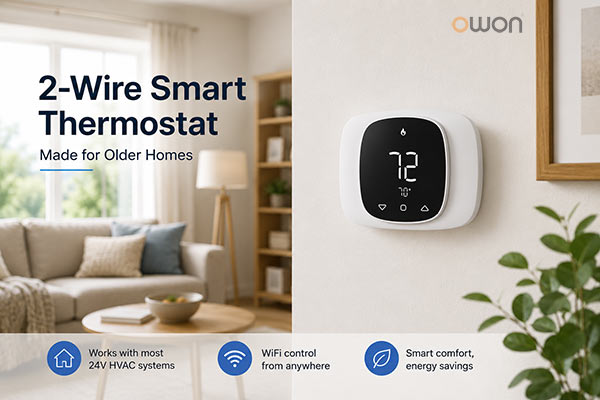
For older homes looking to modernize HVAC control, WiFi-enabled 24VAC solutions can provide a more flexible upgrade path.
For example, some modern smart HVAC control devices support:
- Standard 24VAC systems
- Multi-stage HVAC equipment
- Remote room sensors
- Mobile app access
- Optional C-wire adapter support
A solution such as the OWON 24VAC smart thermostat can help homeowners improve HVAC management while maintaining compatibility with many existing North American heating and cooling systems.
Installation Considerations
Before upgrading to a smart HVAC control system, homeowners should consider:
- Existing HVAC wiring
- Availability of a C wire
- HVAC system type
- WiFi coverage
- Professional installation requirements
For complex HVAC systems or older wiring setups, professional installation may still be recommended.
Conclusion
A 2-wire smart thermostat can provide a practical upgrade path for older homes that lack a traditional C wire.
With modern HVAC retrofit technologies, homeowners no longer need to completely replace existing systems to enjoy smarter temperature control, remote access, and improved energy efficiency.
As smart HVAC technologies continue to evolve, flexible WiFi thermostat solutions designed for older North American homes are becoming increasingly accessible and easier to install.
Related reading:
[Smart Thermostat Premium vs Enhanced: Which One Is Better in 2026]
Post time: May-07-2026