Introduction
Commercial buildings across North America are under increasing pressure to reduce energy consumption, improve occupant comfort, and simplify HVAC system management. Traditional standalone thermostats are no longer sufficient for modern commercial environments where remote monitoring, occupancy-based control, and system-wide automation have become standard expectations.
An HVAC automation solution combines intelligent thermostats, sensors, cloud connectivity, and building integration capabilities into a unified control architecture. For HVAC system integrators, OEM manufacturers, utilities, and smart building providers, automation helps improve operational efficiency while reducing long-term maintenance and energy costs.
As demand grows for scalable and retrofit-friendly HVAC systems, wireless automation platforms are becoming increasingly important in both light commercial and multi-property deployments.
What Is an HVAC Automation Solution?
An HVAC automation solution is a centralized or distributed control system designed to automate heating, cooling, ventilation, humidity management, and occupancy-based temperature control across one or multiple zones.
Modern HVAC automation systems typically include:
- Smart thermostats
- Remote temperature and occupancy sensors
- Cloud or local control platforms
- Mobile applications
- API or BMS integration capability
Unlike conventional thermostats, automated HVAC platforms can continuously optimize system behavior based on occupancy, schedules, outdoor conditions, and energy policies.
For commercial buildings, this improves both energy efficiency and indoor environmental consistency.
Why Commercial Buildings Are Adopting HVAC Automation
Rising Energy Costs
HVAC systems account for a significant percentage of building energy consumption in offices, hotels, apartments, and mixed-use properties.
Automation helps reduce unnecessary runtime through:
- Intelligent scheduling
- Occupancy-based adjustment
- Remote zoning logic
- Temperature setback strategies
These functions can significantly improve overall HVAC operating efficiency.
Demand for Remote Management
Property managers increasingly require centralized visibility across multiple locations.
Modern HVAC automation platforms support:
- Mobile access
- Cloud dashboards
- Remote diagnostics
- Alert notifications
- Energy usage monitoring
This allows building operators to reduce manual intervention while improving response time.
Improved Occupant Comfort
Temperature imbalance is one of the most common complaints in commercial buildings.
A properly designed WiFi thermostat with remote sensors can improve room-by-room comfort control by prioritizing occupied spaces and balancing hot or cold spots throughout the property.
Core Components of a Smart HVAC Automation System
Smart Thermostat Layer
The thermostat acts as the primary HVAC control interface.
Commercial-grade smart thermostats should support:
- Multi-stage heating and cooling
- Heat pump systems
- Dual fuel switching
- Humidity monitoring
- Occupancy sensing
- Installer-level configuration
Many North American projects rely on 24VAC smart thermostat platforms designed for compatibility with conventional HVAC systems and retrofit installations.
Sensor & Zoning Layer
Wireless remote sensors improve environmental visibility across multiple rooms or zones.
In commercial applications, remote sensors are commonly used to:
- Detect occupancy
- Prioritize active rooms
- Improve zoning accuracy
- Reduce energy waste
Some smart HVAC systems support multiple remote sensors for advanced zoning control in offices, apartments, and hospitality environments.
Connectivity & Integration Layer
Modern HVAC automation systems increasingly require integration with:
- Building management systems (BMS)
- Private cloud infrastructure
- Energy management platforms
- Utility demand-response systems
This is why API accessibility and protocol flexibility are critical.
Many commercial projects now prefer HVAC automation devices with:
- MQTT integration
- Device-level APIs
- Cloud-level APIs
- Edge gateway compatibility
How Smart HVAC Controllers Improve Building Efficiency
A smart HVAC controller continuously monitors environmental conditions and adjusts HVAC behavior automatically.
Compared with conventional programmable thermostats, smart controllers provide:
- Faster response to occupancy changes
- Better zoning coordination
- Reduced simultaneous heating/cooling conflicts
- Improved humidity stability
- Lower peak energy usage
For hotels, apartments, and office buildings, these improvements directly impact operating costs and occupant satisfaction.
Traditional HVAC Control vs Smart HVAC Automation
| Feature | Traditional HVAC Control | Smart HVAC Automation Solution |
|---|---|---|
| Temperature Control | Manual or fixed schedule | Dynamic and occupancy-based |
| Remote Access | Limited | Mobile & cloud-based |
| Energy Optimization | Basic | Real-time intelligent adjustment |
| Zoning Capability | Limited | Multi-room zoning support |
| HVAC Integration | Standalone devices | API / BMS integration |
| Maintenance Visibility | Minimal | Remote diagnostics & alerts |
| Scalability | Low | Suitable for multi-property deployment |
Integration with Building Automation Systems
One of the biggest trends in North American commercial HVAC is the integration between smart thermostats and broader building automation systems.
A scalable commercial HVAC control solution should support integration with:
- BMS platforms
- Smart energy dashboards
- Utility energy programs
- IoT ecosystems
- Third-party cloud services
Open system architecture is especially important for HVAC system integrators and OEM partners that require customized deployment logic.
Example Implementation for Commercial HVAC Projects
In practical deployments, HVAC automation solutions may combine:
- WiFi thermostats
- Remote room sensors
- Occupancy detection
- Humidity monitoring
- Energy tracking dashboards
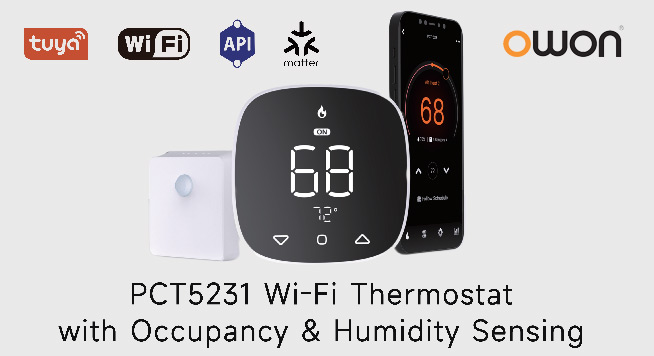
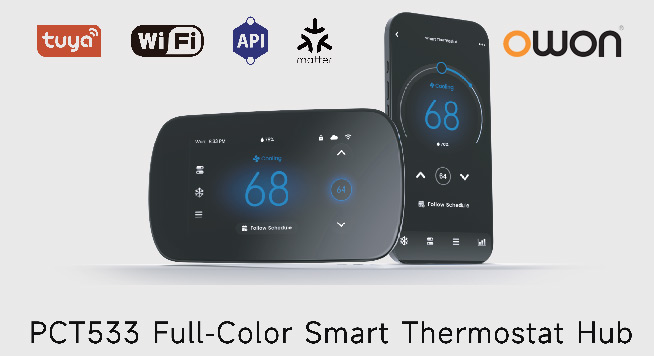
As one example implementation, commercial WiFi thermostat platforms such as PCT5231 and PCT533 can support multi-stage HVAC systems, dual fuel control logic, remote sensor integration, and cloud-based management for residential and light commercial projects.
Rather than functioning as isolated devices, these thermostats are often deployed as part of a broader HVAC automation architecture.
Typical Commercial Applications
Hotels & Hospitality
Automation helps maintain guest comfort while reducing unnecessary HVAC runtime in unoccupied rooms.
Multi-Family Apartments
Remote zoning and occupancy-based control improve comfort consistency across units.
Office Buildings
Centralized HVAC visibility simplifies maintenance and energy management.
Utility Energy Programs
Smart HVAC automation platforms are increasingly integrated into demand-response and energy-efficiency initiatives.
How to Choose an HVAC Automation Solution Provider
When evaluating an HVAC automation solution provider, commercial buyers should consider:
- 24VAC HVAC compatibility
- API accessibility
- MQTT or BMS integration capability
- OEM/ODM customization support
- Remote sensor ecosystem
- Retrofit installation flexibility
- Long-term firmware and cloud support
For system integrators and HVAC brands, scalability and integration flexibility are often more important than standalone thermostat hardware specifications.
Frequently Asked Questions
What is an HVAC automation solution?
An HVAC automation solution is a system that combines smart thermostats, sensors, cloud connectivity, and control logic to automate heating and cooling management across residential or commercial buildings.
What is the difference between a smart thermostat and a smart HVAC controller?
A smart thermostat mainly controls room temperature, while a smart HVAC controller may integrate zoning, occupancy sensing, humidity management, and building automation system connectivity.
Can HVAC automation reduce energy costs?
Yes. HVAC automation systems help reduce unnecessary HVAC runtime through occupancy-based control, scheduling, zoning logic, and remote energy management.
Are WiFi thermostats suitable for commercial HVAC systems?
Modern WiFi thermostats designed for 24VAC HVAC systems can support multi-stage heating and cooling, remote sensors, and cloud integration for light commercial deployments.
Can smart HVAC systems integrate with BMS platforms?
Yes. Many commercial HVAC automation platforms support MQTT, API, or gateway-based integration with building management systems.
Conclusion
HVAC automation is becoming a critical part of modern commercial building infrastructure.
By combining smart thermostats, remote sensors, wireless connectivity, and open integration architecture, commercial HVAC automation solutions help improve comfort, reduce operating costs, and support long-term energy optimization goals.
As North American buildings continue moving toward connected and data-driven HVAC management, scalable automation platforms will play an increasingly important role in both new construction and retrofit projects.
Post time: May-13-2026