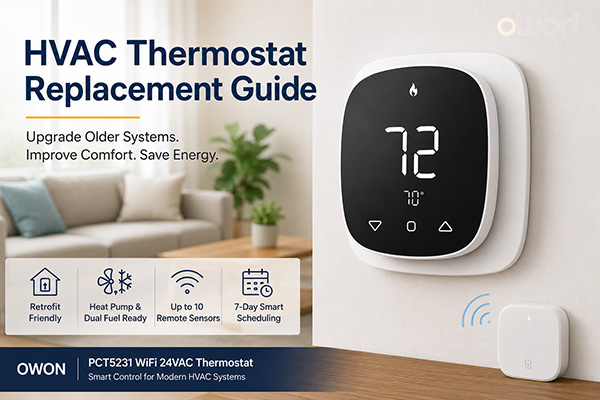
Replacing an HVAC thermostat sounds simple, but in many older homes and light commercial buildings, the process is often more complicated than swapping one wall device for another. HVAC contractors frequently encounter missing C wires, unclear terminal labels, heat pump wiring differences, or older control boards that are not fully compatible with modern smart thermostats.
That is why a successful HVAC thermostat replacement project should always begin with proper system identification and wiring verification — not simply choosing a thermostat based on appearance or mobile app features.
A well-matched thermostat can improve comfort, reduce unnecessary HVAC runtime, and make an older heating and cooling system easier to manage. On the other hand, using an incompatible thermostat may lead to short cycling, unstable temperature control, or improper heating and cooling staging.
As smart HVAC upgrades continue growing across North America, many contractors, distributors, and property managers are now looking for retrofit-friendly solutions from a professional 24VAC thermostat manufacturer that understands both traditional HVAC systems and modern smart control requirements.
Why Homeowners and Contractors Replace Older Thermostats
There are several common reasons why HVAC thermostat replacement projects have become increasingly popular.
In many cases, the HVAC equipment itself is still functional, but the thermostat controlling it is outdated.
Older thermostats may lack:
- WiFi connectivity
- Smart scheduling
- Remote mobile control
- Multi-stage HVAC support
- Heat pump optimization
- Energy usage tracking
Some older digital thermostats also struggle with temperature accuracy or fail to maintain stable room comfort throughout the day.
In apartments, hotels, and older office buildings, property managers often replace thermostats during renovation projects to improve energy efficiency and reduce maintenance complaints.
Common Problems Found During Thermostat Replacement
Experienced HVAC installers know that thermostat replacement can reveal hidden system issues.
Missing C Wire
Many older HVAC systems only have four wires connected to the thermostat. Modern WiFi thermostats usually require continuous 24VAC power, which often creates installation challenges in older homes.
Heat Pump Wiring Differences
Heat pump systems may use O/B reversing valve wiring and auxiliary heating stages that differ from conventional furnace systems.
Outdated HVAC Control Boards
Some older furnace control boards may not fully support newer thermostat features.
Incorrect Thermostat Compatibility
Not every thermostat supports:
- Dual fuel systems
- Multi-stage HVAC
- Boilers
- Heat pumps
- Humidifier control
This is why system compatibility should always be checked before installation begins.
What Contractors Usually Check Before Replacing a Thermostat
Professional HVAC installers normally inspect several important details before recommending a replacement thermostat.
Common HVAC Thermostat Replacement Compatibility Checks
| Item to Check | Why It Matters |
|---|---|
| HVAC system type | Determines thermostat compatibility |
| Number of thermostat wires | Helps identify if a C-wire adapter is needed |
| Heat pump or conventional system | Different wiring and control logic |
| Multi-stage HVAC support | Prevents incorrect heating/cooling staging |
| Existing voltage | Most North American systems use 24VAC |
| WiFi signal strength | Important for stable smart control |
| Humidifier/dehumidifier control | Required in some advanced HVAC systems |
The first step is identifying whether the building uses:
- Gas furnace
- Heat pump
- Boiler
- Dual fuel system
- Multi-stage HVAC
- Radiant heating
Contractors also usually inspect the number of existing thermostat wires, terminal labels, furnace board connections, and whether a dedicated C wire is available.
For smart thermostat upgrades, stable WiFi coverage is another important factor, especially in larger homes or commercial retrofit projects.
Replacing an Older Thermostat Without a C Wire
One of the most common retrofit situations involves replacing a thermostat in a home that has no dedicated C wire.
This is especially common in houses built before smart thermostats became popular.
Fortunately, many modern WiFi thermostats now support:
- C-wire adapters
- Power extender kits
- Alternative wiring solutions
These solutions allow contractors to modernize older HVAC systems without opening walls or running new thermostat cable.
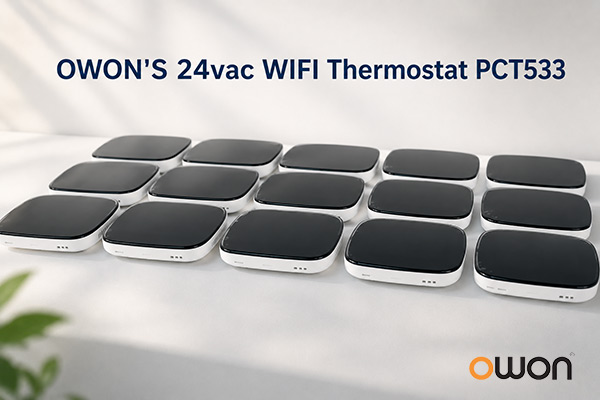
For example, OWON’s PCT5231 and PCT533 WiFi thermostat platforms support optional 24VAC C-wire adapter solutions for older HVAC retrofit projects while maintaining compatibility with modern heating and cooling systems.
Smart Thermostat Features That Matter in Real HVAC Projects
Many thermostat advertisements focus heavily on mobile apps or touchscreens, but experienced HVAC professionals usually pay closer attention to compatibility and control logic.
In real retrofit projects, the following features are often more important:
Multi-Stage HVAC Support
Older commercial and residential systems may require multiple heating and cooling stages.
Heat Pump Compatibility
This includes support for:
- Auxiliary heat
- Emergency heat
- Dual fuel switching
Remote Sensors
Remote room sensors help balance temperature differences throughout larger homes or multi-room buildings.
Flexible Scheduling
Advanced scheduling can improve comfort while reducing unnecessary HVAC runtime.
Humidity Control
In some climates, humidifier or dehumidifier integration becomes important for comfort and indoor air quality.
OWON’s smart thermostat lineup supports features such as remote room sensors, occupancy sensing, humidity monitoring, and multi-stage HVAC control for both residential and light commercial applications.
Why Commercial Thermostat Replacement Is Growing
Commercial HVAC thermostat replacement has become increasingly common in:
- Hotels
- Apartment buildings
- Offices
- Schools
- Light commercial retrofit projects
Many older buildings still use basic thermostats with limited scheduling and no remote management capability.
Today, property managers often want:
- Remote HVAC monitoring
- Better energy control
- Occupancy-based scheduling
- Centralized management
- Reduced tenant complaints
A modern Commercial HVAC Thermostat can help improve both operational efficiency and occupant comfort, especially in retrofit projects where replacing the full HVAC system would be too expensive.
OWON also provides smart HVAC control solutions for commercial and smart building projects, including wireless BMS integration, remote HVAC management, and MQTT/API-based system connectivity for property management and energy optimization applications.
The Growing Shift Toward Smart HVAC Retrofits
Across North America, more buildings are upgrading HVAC controls instead of replacing entire HVAC systems.
Several factors are driving this trend:
- Rising energy costs
- Smart building adoption
- Heat pump growth
- Energy efficiency regulations
- Demand for remote property management
As a result, retrofit-friendly smart thermostat solutions are becoming an important part of HVAC modernization strategies.
Manufacturers focused on smart HVAC control are increasingly designing thermostat platforms that support both traditional HVAC equipment and newer energy management requirements.
With years of experience in HVAC control and IoT-based building solutions, OWON continues developing WiFi thermostat platforms designed for residential upgrades, commercial HVAC retrofit projects, and smart energy management systems.
Final Thoughts
A successful HVAC thermostat replacement project is not just about installing a newer wall controller. It requires understanding the HVAC system, checking compatibility, verifying wiring, and choosing a thermostat that matches the building’s actual heating and cooling requirements.
For older residential and light commercial buildings, modern WiFi thermostat solutions can often provide a practical upgrade path without major HVAC reconstruction or expensive rewiring.
As smart HVAC technology continues evolving, thermostat replacement projects will remain one of the most cost-effective ways to improve comfort, energy efficiency, and HVAC control in existing buildings.
Post time: May-25-2026