As solar energy systems become more intelligent and interconnected, energy measurement is no longer limited to utility billing or basic consumption tracking. Modern solar installations increasingly rely on energy data to support inverter control, battery storage optimization, and energy management system (EMS) decision-making.
In this environment, the role of the solar energy meter has evolved from a simple monitoring device into a critical data source within the overall energy architecture.
Whether a project involves rooftop solar, commercial battery storage, or a large-scale EMS deployment, accurate and real-time energy data helps improve system visibility, operational efficiency, and energy utilization.
What Is a Solar Energy Meter?
A solar energy meter is a device used to measure electrical energy flowing between solar generation systems, building loads, battery storage systems, and the utility grid.
Unlike conventional electricity meters, modern solar energy meters often provide:
- Real-time power measurement
- Energy consumption monitoring
- Solar generation monitoring
- Import and export energy tracking
- Power quality measurements
- Historical energy analytics
Many advanced meters also support communication with inverters, EMS platforms, and cloud-based monitoring systems.
Why Solar Projects Need More Than Basic Energy Monitoring
Traditional electricity meters focus primarily on billing and cumulative energy consumption.
Modern solar projects require additional visibility.
Project stakeholders often need answers to questions such as:
- How much energy is the solar array generating?
- How much energy is being consumed on-site?
- How much electricity is being exported to the grid?
- When should batteries charge or discharge?
- How can energy costs be reduced?
Answering these questions requires continuous and accurate energy measurement.
This is why solar energy meters are increasingly integrated into energy management architectures.
The Role of Solar Energy Meters in Inverter Systems
Solar inverters convert DC power generated by photovoltaic panels into AC power used by buildings and the utility grid.
However, inverters alone do not always provide a complete view of site-wide energy flows.
A solar energy meter can provide additional measurement points that help operators understand:
- Total building consumption
- Grid import energy
- Grid export energy
- Solar production
- Load demand patterns
This information supports more accurate performance analysis and energy optimization.
Solar Energy Meters and EMS Platforms
Energy Management Systems (EMS) rely on data.
Without accurate measurement data, an EMS cannot make informed decisions about energy allocation, battery charging schedules, or load management strategies.
A typical EMS architecture may include:
- Solar inverter
- Solar energy meter
- Battery storage system
- Building loads
- EMS controller
- Utility grid connection
Within this architecture, the solar energy meter acts as a key source of real-time operational data.
By continuously measuring energy flows, the EMS can optimize how energy is consumed, stored, or exported.
Why Bidirectional Energy Measurement Matters
One of the most important requirements in modern solar projects is bidirectional energy monitoring.
Unlike traditional loads that only consume electricity, solar systems both consume and produce energy.
A bidirectional energy meter can measure:
- Imported energy from the grid
- Exported solar energy
- Net energy flow
- Self-consumption performance
This information helps operators evaluate system performance and maximize the value of solar investments.
For battery storage projects, bidirectional monitoring is often essential because batteries can both charge and discharge depending on system conditions.
Solar Energy Meters for Battery Storage Systems
Battery Energy Storage Systems (BESS) are becoming increasingly common in commercial and industrial energy projects.
Battery systems require accurate information about:
- Building energy demand
- Solar generation levels
- Grid conditions
- Charge and discharge cycles
A solar energy meter helps provide the data required for these decisions.
When integrated with an EMS, energy measurement can support:
- Peak demand reduction
- Time-of-use optimization
- Self-consumption improvement
- Backup power strategies
Choosing a Solar Energy Meter for Modern Energy Projects
When selecting a solar energy meter, project designers should evaluate more than measurement accuracy alone.
Important considerations include:
Electrical Compatibility
- Single-phase
- Split-phase
- Three-phase
- Three-phase three-wire
Communication Options
- Ethernet
- WiFi
- RS485
- Modbus RTU
- Modbus TCP
- MQTT
Monitoring Functions
- Active power
- Reactive power
- Apparent power
- Power factor
- Frequency
- Energy import and export
System Integration
The meter should be capable of supporting integration with:
- Solar inverters
- EMS platforms
- Battery storage systems
- Building management systems
Example: Smart Solar Energy Meter for EMS and Storage Projects
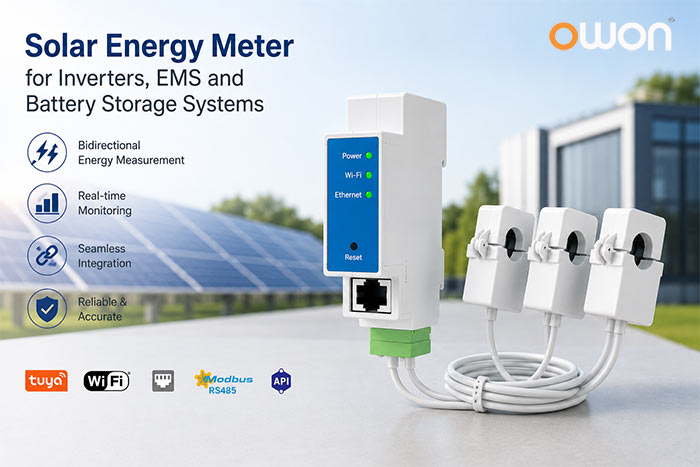
As a smart energy meter manufacturer, OWON develops energy monitoring solutions designed for solar and energy management applications.
For example, the PC4713 Smart Energy Meter supports:
- Single-phase, split-phase, and three-phase systems
- Three-phase three-wire compatibility
- Bidirectional energy measurement
- Active, reactive, and apparent power monitoring
- WiFi and Ethernet connectivity
- Integration with smart energy monitoring platforms
These capabilities make it suitable for solar energy monitoring, EMS deployments, and battery storage projects where reliable energy visibility is required.
FAQ
What is a solar energy meter?
A solar energy meter measures electricity flowing between solar panels, building loads, battery storage systems, and the utility grid.
Do solar battery systems need an energy meter?
Many battery storage systems benefit from energy meters because they provide the real-time data required for charging, discharging, and energy optimization decisions.
What is bidirectional energy measurement?
Bidirectional measurement tracks both imported energy from the grid and exported energy from solar generation systems.
Can a solar energy meter work with an EMS?
Yes. Many modern energy meters support integration with EMS platforms through Ethernet, WiFi, RS485, or industrial communication protocols.
Conclusion
Solar energy meters have become an essential component of modern energy systems. By providing accurate, real-time visibility into energy generation, consumption, storage, and grid interaction, they help support more effective inverter operation, EMS control strategies, and battery storage optimization.
As solar and energy storage projects continue to evolve, reliable energy measurement will remain a foundational element of intelligent energy management.
Related reading:
[RS485 Energy Meter Selection Guide for Industrial Power Monitoring and EMS Integration]
Post time: Jun-29-2026