Introduction: Understanding Smart Energy Meter Manufacturing in China
China has become one of the world’s most important manufacturing hubs for smart energy meters, supplying devices for residential, commercial, and distributed energy projects across Europe, North America, the Middle East, and emerging markets. As global demand for energy monitoring, grid visibility, and intelligent power management continues to grow, more buyers are turning to smart energy meter manufacturers in China for scalable production and technology innovation.
However, not all manufacturers operate at the same technical, compliance, or quality level. Differences in metering accuracy, communication protocols, certification readiness, and customization capability can significantly impact product performance and long-term project success.
For global buyers, system integrators, and energy solution providers, selecting a smart energy meter manufacturer is no longer just about cost. It requires a clear understanding of how different types of suppliers operate, how to evaluate technical capability, and what criteria truly matter when choosing a long-term manufacturing partner.
This article explains how to evaluate smart energy meter manufacturers in China, outlines common supplier categories, and provides practical guidance for identifying reliable partners for international energy monitoring projects.
The Role of Smart Energy Meters in Modern Energy Systems
Smart energy meters are widely used for non-billing energy monitoring, system optimization, and real-time power visibility rather than utility revenue metering. Typical applications include:
-
Residential and commercial energy monitoring
-
Solar PV and energy storage systems
-
Building energy management systems (BMS)
-
Load analysis and sub-metering
-
Smart home and IoT energy platforms
Modern smart meters increasingly rely on clamp-based current measurement, digital signal processing, and wireless communication technologies to deliver accurate, real-time data without complex rewiring.
Types of Smart Energy Meter Manufacturers in China
When sourcing from China, buyers typically encounter several types of manufacturers:
Original Design Manufacturers (ODMs)
These manufacturers design both hardware and firmware in-house and offer customization for communication protocols, measurement ranges, and system integration.
OEM-Focused Factories
OEM factories primarily focus on cost-efficient production based on existing reference designs or customer-provided specifications, with limited customization depth.
Specialized Energy Meter Manufacturers
Some manufacturers like Owon company focus specifically on non-billing smart power meters, emphasizing monitoring accuracy, clamp flexibility, and communication compatibility rather than regulated utility billing.
Understanding which category a supplier belongs to helps buyers align expectations regarding customization capability, lead time, and technical support.
How to Evaluate Smart Energy Meter Manufacturers in China
Selecting the right manufacturer requires evaluation beyond brochures and price lists. The following criteria provide a practical framework for comparison.
1. Certification and Compliance Capability
Manufacturers supplying international markets must support certifications such as CE, FCC, or region-specific regulatory requirements. Certification readiness reflects product design maturity, testing capability, and quality management systems.
2. Metering Accuracy and Measurement Flexibility
Smart energy meters vary in accuracy class, CT ranges, and supported electrical topologies. Manufacturers experienced in clamp-based metering, single-phase, split-phase, and three-phase systems are better positioned to support diverse applications.
3. Communication Protocols and Platform Compatibility
Modern energy projects often require compatibility with Wi-Fi, Zigbee, LoRa, 4G, MQTT, and cloud APIs. Protocol flexibility reduces integration complexity and future migration risks.
4. Customization and Product Adaptability
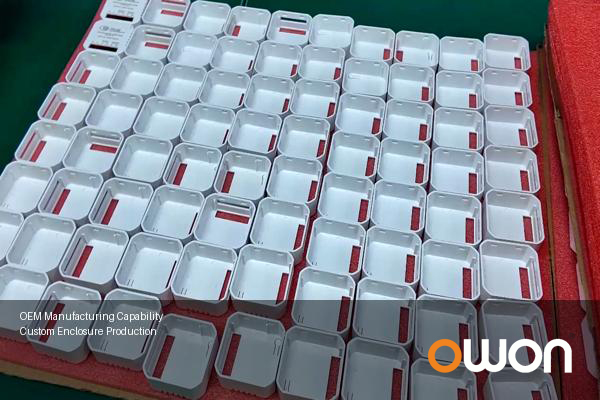
Beyond standard models, many projects require firmware customization, protocol adaptation, or enclosure and labeling changes. The ability to support iterative customization without disrupting production timelines is a key differentiator.
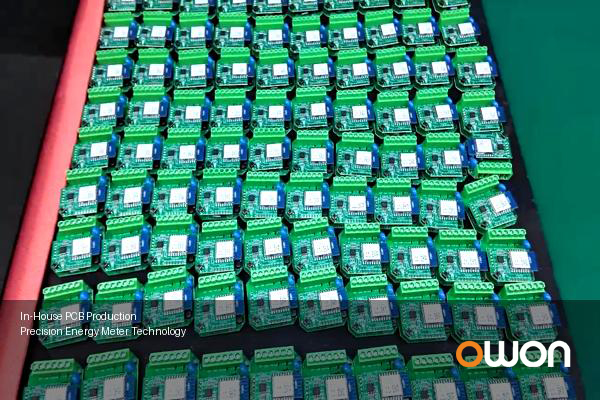
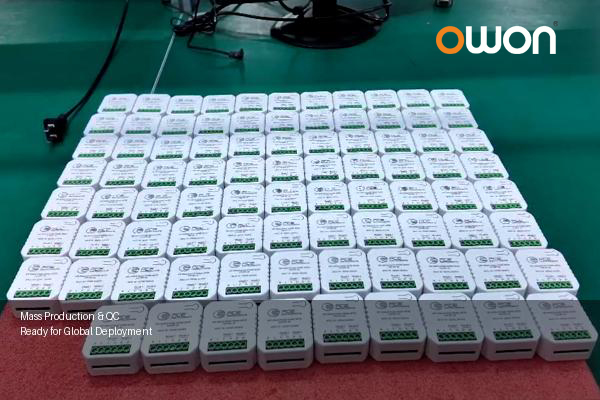
5. Production Scale and Quality Control
Consistent quality depends on standardized manufacturing processes, calibration procedures, and traceability systems. Buyers should assess whether a manufacturer can scale from pilot runs to volume production while maintaining accuracy and reliability.
6. Long-Term Technical Support
Smart energy meters require ongoing firmware updates and technical support as system requirements evolve. Manufacturers with in-house R&D teams and deployment experience are better suited for long-term cooperation.
Comparison: What Differentiates Smart Energy Meter Manufacturers in China
| Evaluation Dimension | Basic OEM Factories | Specialized Meter Manufacturers | OWON’s Manufacturing Approach |
|---|---|---|---|
| Product Focus | Cost-driven standard models | Monitoring-focused meters | Monitoring & system integration |
| Meter Accuracy & CT Options | Limited ranges | Multiple CT options | Wide CT range, calibrated accuracy |
| Communication Protocols | Single protocol | Wi-Fi or Zigbee | Wi-Fi, Zigbee, MQTT-ready |
| Customization Capability | Low | Medium | Firmware & protocol customization |
| Application Scenarios | Generic use | Energy monitoring | PV, EMS, BMS, IoT platforms |
| Long-Term Support | Production only | Limited support | R&D-backed technical support |
OWON’s Role in Smart Energy Meter Manufacturing
As a manufacturer actively involved in global energy monitoring projects, OWON represents a practical example of how Chinese smart energy meter manufacturers support international requirements beyond mass production.
OWON focuses on non-billing smart energy meters designed for monitoring and energy management applications, including:
-
Clamp-based Wi-Fi,Zigbee,4G,Lora energy meters
-
Single-phase, split-phase, and three-phase measurement
-
Flexible CT selection for residential and commercial loads
-
Compatibility with energy management systems, solar PV platforms, and IoT ecosystems
Rather than targeting regulated utility billing, OWON’s meters are designed to support energy visibility, system optimization, and integration with distributed energy resources.
This approach reflects a broader trend among advanced Chinese manufacturers: shifting from hardware-only supply toward solution-oriented energy monitoring platforms.

Deployment Considerations for Integrators and Energy Projects
For project-based and multi-site deployments, additional factors include:
-
Communication stability across different environments
-
Local operation capability independent of cloud availability
-
Scalability across multiple installations
-
Compatibility with inverters, gateways, and EMS platforms
Manufacturers combining standardized production with customization capability are better positioned to support these requirements.
Conclusion: Choosing the Right Smart Energy Meter Manufacturer
China offers a diverse ecosystem of smart energy meter manufacturers capable of supporting global energy monitoring projects. However, successful sourcing depends on more than pricing alone. Evaluating certification readiness, measurement capability, communication flexibility, and long-term technical support is essential for identifying reliable partners.
Manufacturers such as OWON, with experience in non-billing smart energy meters and system integration, illustrate how Chinese suppliers are evolving from component providers into long-term technology partners for international energy projects.
Final Note
For organizations evaluating smart energy meter manufacturers in China, applying a structured evaluation framework helps ensure technical alignment, deployment stability, and long-term system scalability.
Related reading:
[Zigbee Power Meter: Smart Home Energy Monitor]
Post time: Sep-20-2025