Choosing the right smart thermostat for home use can make heating and cooling more convenient, improve comfort, and help reduce unnecessary HVAC operation. But with different HVAC systems, wiring requirements, and smart features available, how do you know which thermostat is right for your home?
Whether you have a central air conditioner, furnace, or heat pump, this guide explains what to look for before upgrading your thermostat.
What Makes a Good Smart Thermostat for Home?
A good smart thermostat should do more than display the room temperature. It should work with your existing HVAC equipment and make everyday temperature control easier.
Common features include:
- WiFi and app control: Adjust temperatures remotely using a smartphone.
- Smart scheduling: Set heating and cooling temperatures around daily routines.
- Remote room sensors: Monitor temperatures in different rooms.
- HVAC compatibility: Support the required heating and cooling system.
- Energy information: Review HVAC usage patterns when supported.
The best smart thermostat for home use is not necessarily the one with the most features. It is the one that matches your HVAC system and household needs.
Will a Smart Thermostat Work with My AC or Heat Pump?
Before choosing a thermostat, check your home’s HVAC system.
Most North American central heating and cooling systems use low-voltage thermostat controls, commonly 24VAC. However, not every system uses the same wiring or control configuration.
| HVAC System | What to Check |
|---|---|
| Central AC and furnace | Heating and cooling stages, wiring and voltage |
| Heat pump | O/B reversing valve, compressor stages and auxiliary heat |
| Multi-stage HVAC | Number of heating and cooling stages |
| Dual fuel system | Heat pump and backup heating control |
| Electric baseboard heating | Line-voltage compatibility, typically requiring a different thermostat type |
If your home uses a heat pump, make sure the thermostat supports its specific configuration, including auxiliary or emergency heat where required.
Tip: Check the existing thermostat wiring and HVAC equipment specifications before purchasing a replacement.
Can You Install a Smart Thermostat Without a C-Wire?
One common concern is whether a smart thermostat for home without a C-wire can be installed.
A C-wire, or common wire, provides a continuous electrical return path for compatible 24VAC-powered thermostats. Many WiFi thermostats need this connection for reliable operation.
If your current thermostat does not have a C-wire, you may have several options:
- Check whether an unused wire is available in the thermostat cable.
- Use a compatible C-wire adapter if supported by the thermostat and HVAC system.
- Ask an HVAC technician to assess the existing wiring.
Not every smart thermostat works without a C-wire, and not every adapter works with every HVAC system.
For older homes, checking the wiring before buying can prevent installation problems.
Can One Smart Thermostat Control Multiple Rooms?
Homes often have different temperatures in bedrooms, living rooms, and upstairs areas.
A smart thermostat for home with multiple zones may sound like the ideal solution, but it is important to understand the difference between remote room sensing and independent HVAC zoning.
Remote room sensors measure conditions in different areas and may allow the thermostat to prioritize selected rooms.
HVAC zoning systems use compatible zone controllers, dampers, or separate HVAC equipment to manage temperatures independently.
For example, a thermostat with remote sensors can help a central HVAC system respond to temperatures in selected rooms. However, it cannot independently deliver different temperatures to every room unless the HVAC system supports zoning.
For homes with uneven temperatures, remote room sensors are worth considering before upgrading the entire HVAC control system.
Can You Control a Smart Thermostat with an App?
A smart thermostat for home with app control lets you manage heating and cooling without being physically near the thermostat.
Depending on the model, smartphone features may include:
- Changing the target temperature remotely
- Switching heating and cooling modes
- Creating weekly schedules
- Receiving temperature or maintenance alerts
- Viewing HVAC usage information
Some thermostats can also participate in home automation systems. However, compatibility with platforms such as Home Assistant depends on the specific thermostat model, supported protocols, and available integrations.
If home automation is important, verify platform compatibility before purchasing.
Is Smart Thermostat Installation Difficult?
Installing a smart thermostat can be straightforward when the existing wiring and HVAC system are compatible.
However, incorrect wiring or configuration can cause heating and cooling problems.
Before installation:
- Turn off power to the HVAC equipment.
- Photograph and label the existing thermostat wiring.
- Confirm the new thermostat supports the HVAC system.
- Check C-wire and power requirements.
- Follow the manufacturer’s wiring and configuration instructions.
- Test heating, cooling, fan operation, and auxiliary heat where applicable.
For multi-stage heat pumps, dual fuel systems, or unfamiliar wiring, professional installation is recommended.
Which Smart Thermostat Features Should You Prioritize?
The right features depend on your home and how you use your HVAC system.
| Your Home’s Needs | Features to Look For |
|---|---|
| Control temperatures while away | WiFi and smartphone app |
| Follow regular daily routines | Seven-day scheduling |
| Improve comfort across rooms | Remote room sensors |
| Support an advanced heat pump | Multi-stage and auxiliary heat control |
| Manage indoor humidity | Compatible humidity control |
| Understand HVAC operation | Usage reports and maintenance alerts |
| Upgrade older thermostat wiring | Compatible C-wire adapter option |
Instead of choosing a thermostat based only on appearance or price, prioritize HVAC compatibility and the features you will actually use.
Smart Thermostat Options for North American Homes
For homes with compatible 24VAC HVAC systems, OWON Technology offers several WiFi thermostat options designed for different comfort and control requirements.
The PCT513 WiFi Touchscreen Thermostat provides touchscreen operation and remote room sensor support for compatible heating and cooling systems.
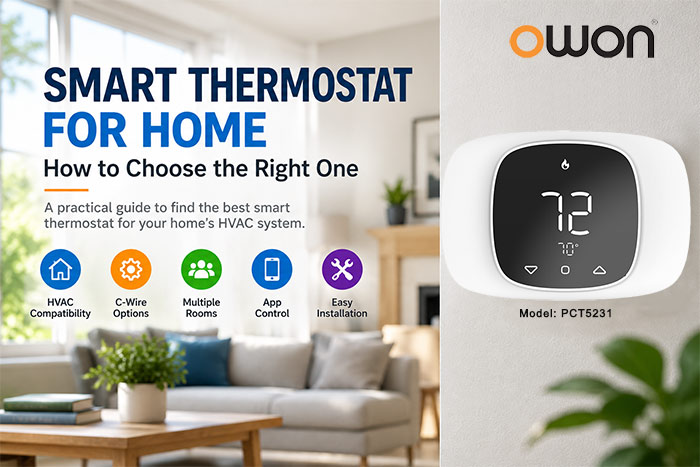
The PCT5231 WiFi Thermostat supports advanced heat pump configurations, dual fuel applications, and up to 10 remote room sensors. It also offers seven-day scheduling and an optional C-wire adapter for suitable installations.
The PCT533 WiFi Thermostat features a 4.3-inch touchscreen, occupancy sensing, and humidity control capabilities for compatible HVAC equipment.
These options illustrate how thermostat features can be matched to different home HVAC requirements.
For HVAC contractors, distributors, and smart home brands, OWON also provides thermostat OEM/ODM development and customization services.
Frequently Asked Questions
What is the best smart thermostat for home use?
The best option depends on your HVAC system, wiring, and preferred features. Look for compatibility with your AC or heat pump, reliable app control, scheduling, and remote sensors if needed.
Can a smart thermostat work with an existing air conditioner?
Yes, many smart thermostats work with compatible central air conditioning systems. Check the voltage, wiring, and cooling stages before installation.
Do all smart thermostats need a C-wire?
No. Power requirements vary by model. Some thermostats support alternative power arrangements or compatible C-wire adapters, while others require a dedicated common wire.
Can a smart thermostat control upstairs and downstairs separately?
Only if the HVAC system supports independent zoning or separate system control. Remote room sensors alone do not create independent heating and cooling zones.
Can I install a smart thermostat myself?
Some homeowners can replace a compatible thermostat by following the manufacturer’s instructions. Professional installation is advisable for complex HVAC systems or uncertain wiring.
Are smart thermostats worth it?
A compatible smart thermostat can improve convenience through remote control, scheduling, and room temperature monitoring. Potential energy savings depend on how the thermostat is configured and how the HVAC system is used.
Conclusion
Choosing the right smart thermostat for home use starts with understanding your existing heating and cooling system.
Before upgrading, check HVAC compatibility, C-wire requirements, app functionality, and whether remote room sensors or advanced heat pump control are necessary.
By focusing on the features that match your home, you can select a thermostat that provides convenient control and more comfortable everyday living.
For North American 24VAC HVAC applications, explore OWON’s WiFi thermostat solutions to find options suited to different heating, cooling, and smart home requirements.
Post time: Oct-23-2026