
Zigbee fall detection sensors are devices crafted to identify and monitor falls, which are particularly beneficial for the elderly or those with mobility challenges. The sensor's sensitivity is a key determinant of its effectiveness in recognizing falls and ensuring prompt assistance. However, contemporary devices have sparked debates over their sensitivity and whether they justify their cost.
A major issue with current Zigbee fall detection sensors lies in their sensitivity level for accurately detecting falls. Some users have experienced situations where the sensors either did not register a fall or emitted false alerts, shaking their confidence in the device's reliability. This skepticism has led to doubts regarding the sensors' overall efficacy in timely emergency assistance.
Additionally, there's a concern regarding the sensors' capability to differentiate between normal movements and actual falls. False alarms can instigate unnecessary anxiety and stress for the users and their caregivers, potentially reducing trust and the perceived value of the device.
Conversely, there are instances where the sensors exhibit over-sensitivity, leading to frequent false triggers caused by trivial movements or shifts in posture. This overzealousness can frustrate users and might ultimately result in them ignoring the alerts, diminishing the device's usefulness and potential for saving lives.
In light of these challenges, it is crucial for prospective buyers to diligently evaluate the sensitivity of Zigbee fall detection sensors prior to purchase. Engaging in comprehensive research, consulting user feedback, and seeking guidance from healthcare practitioners can offer crucial insights into these devices' real-world effectiveness.
However, as fall detection technology evolves, newer approaches are addressing many of these limitations.
How Advanced Radar-Based Fall Detection Improves Accuracy
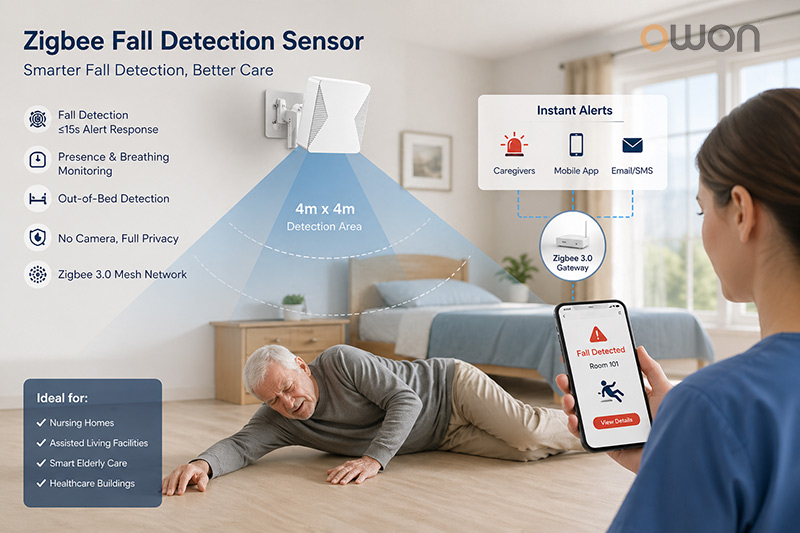
Modern fall detection systems are increasingly using millimeter-wave radar technology to improve both sensitivity and accuracy. Compared to traditional motion-based sensors, radar-based solutions can better distinguish between normal daily movements and actual fall events.
These systems are capable of detecting presence, breathing patterns, and inactivity in real time, significantly reducing both missed detections and false alarms. In addition, radar-based sensors operate without cameras, making them suitable for privacy-sensitive environments such as nursing homes and assisted living facilities.
For example, radar-based solutions such as Owon's FDS315 Zigbee fall detection sensor integrate advanced sensing with wireless connectivity, allowing seamless deployment in multi-room environments. Developed by experienced IoT manufacturers, these devices can be integrated into a broader elderly monitoring system to provide real-time alerts and centralized management.
Nevertheless, despite concerns about sensitivity, Zigbee fall detection sensors hold promise in providing increased safety and comfort for individuals susceptible to falls. When calibrated correctly and properly installed, these devices can offer crucial support during emergencies, especially when backed by a reliable response system.
In closing, while the current Zigbee fall detection sensors present valid concerns pertaining to monitoring sensitivity and efficiency, assessing other considerations such as user reviews, reliability, and overall effectiveness remains vital before making a purchase choice. Continued technological advancements and improvements in sensor precision suggest that Zigbee fall detection sensors could indeed be a smart investment in enhancing safety and well-being for those in need of fall monitoring and support.
While evaluating sensitivity is essential, fall detection devices should not be considered in isolation. In real-world deployments, they are often part of a larger elderly monitoring system that includes gateways, emergency alerts, and centralized dashboards.
Zigbee-based solutions enable reliable wireless communication and scalable deployment across multiple rooms, making them suitable for institutional environments such as nursing homes and senior care facilities.
Related reading:
[Zigbee Presence Sensor with Home Assistant: Setup, Integration & Use Cases]
Post time: Oct-16-2024