Let’s start with a question.
If you could only stock one Zigbee product, what would it be?
A door sensor?
A presence sensor?
A temperature sensor?
Maybe a fall detection sensor?
If you asked ten retailers, you would probably get ten different answers.
But here is the interesting part.
It is also the wrong question.
Because successful smart home retailers rarely win by finding the best-selling product.
They win by building a product line that keeps customers coming back.
And if your customers happen to be Home Assistant and Zigbee2MQTT users, that difference matters more than ever.
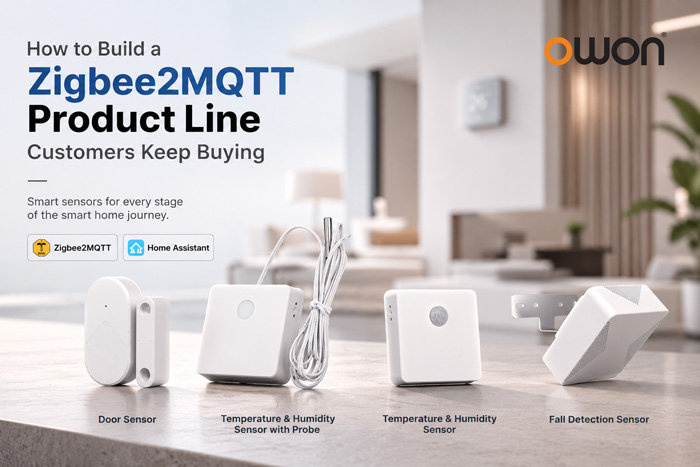
Your Biggest Risk Is Not Choosing the Wrong Product
Let’s be honest.
Running a distribution business is not a hobby.
Cash flow matters.
Inventory matters.
One slow-moving product can quickly become expensive warehouse decoration.
Well-known brands certainly have their advantages.
Customers recognise them.
They trust them.
They often sell themselves.
But those advantages sometimes come with trade-offs:
- Higher MOQs
- Strict pricing policies
- Limited flexibility
- More capital tied up in inventory
If you are a growing distributor or private label brand, that is a lot of pressure.
Sometimes the safer strategy is not chasing the biggest brand.
It is building a product portfolio that lets you grow steadily, test new categories and react faster to what your customers actually want.
Home Assistant Users Are Different (In the Best Possible Way)
Most consumers buy a smart sensor.
Then they stop.
Home Assistant users?
They rarely stop.
They buy a door sensor.
Then they discover automations.
Then they want a water leak sensor.
A few weeks later they need a presence sensor.
Then they decide to monitor a wine cellar with a probe temperature sensor.
Eventually someone starts building an independent living project and begins looking at fall detection sensors.
Sound familiar?
You are not selling to people who collect gadgets.
You are selling to people who never stop improving their systems.
That is exactly why Zigbee2MQTT has become such an attractive ecosystem.
People are not buying isolated devices.
They are building something that evolves over time.
Sell an Ecosystem, Not a Bestseller
Many retailers spend months asking:
“What is your best-selling product?”
A better question is:
“What will my customer buy next?”
That single change in mindset can completely change your business.
Instead of relying on one hero product, you build a product line that naturally grows alongside your customer’s smart home.
The result?
Higher repeat purchases.
Higher customer lifetime value.
Less pressure to constantly find new customers.
A Product Line That Grows With Your Customers
One of the biggest advantages of an open ecosystem is that different products solve different stages of a customer’s journey.
| Customer Stage | What They’re Trying to Do | Product Opportunities |
|---|---|---|
| Getting Started | Build the first automation | Door Sensor |
| Smarter Automations | Improve room awareness | Presence Sensor, Water Leak Sensor |
| Solving Specific Problems | Monitor equipment or difficult environments | Probe Temperature Sensor |
| Family Safety & Independent Living | Build more meaningful automations | Fall Detection Sensor, Panic Button, Urine Leakage Detector |
Notice something?
You are no longer selling individual devices.
You are helping customers expand their systems.
And customers who keep expanding their systems tend to keep buying.
Why Zigbee2MQTT Makes This Easier
Ask an experienced DIY user what matters most.
It is rarely the mobile app.
It is usually one simple question:
“Will it work with my existing setup?”
That is why Zigbee2MQTT compatibility has become a genuine selling point.
Not because it sounds technical.
Because it gives users something they value even more:
Freedom.
Freedom to choose hardware.
Freedom to change gateways.
Freedom to build automations their own way.
Freedom to avoid being locked into one ecosystem.
For retailers, that freedom translates into something much more practical:
A much larger addressable customer base.
Build a Portfolio That Keeps Growing
If you are targeting Home Assistant users, remember this:
Today’s door sensor customer could become tomorrow’s presence sensor customer.
Next month they might be looking for a probe temperature sensor.
A few months later they may start building an independent living automation system using a fall detection sensor.
Your customers don’t stop after buying one sensor.
Your product line shouldn’t stop there either.
That is why OEM-friendly suppliers with broad Zigbee2MQTT-compatible portfolios are becoming increasingly attractive for retailers and private label brands.
Instead of chasing one blockbuster product, you build an ecosystem that grows with your customers—and a business that grows with it.
Conclusion
There is no perfect Zigbee product.
There is only the next problem your customer wants to solve.
The retailers who succeed in the Home Assistant era will not necessarily have the biggest catalogue.
They will have the catalogue their customers keep coming back to.
And that is exactly what makes an open Zigbee2MQTT ecosystem so powerful.
FAQ
Why are Home Assistant users valuable customers?
Because they typically expand their systems over time, creating higher repeat purchases and stronger customer lifetime value than one-time buyers.
Why does Zigbee2MQTT matter for retailers?
Products compatible with Zigbee2MQTT appeal to a large DIY community that values interoperability, local control and open ecosystems.
Which Zigbee products are easiest to start selling?
Products such as door sensors and presence sensors are popular entry points, while specialised devices like probe temperature sensors and fall detection sensors help expand your product portfolio.
Why is a broad Zigbee product line better than relying on one bestseller?
A broader portfolio allows customers to keep upgrading their smart homes over time, increasing repeat purchases while reducing your dependence on a single high-volume SKU.
Post time: Jul-28-2026