A programmable WiFi thermostat combines automatic temperature scheduling with convenient remote HVAC control. For North American homes, apartments, and light commercial buildings, it offers a practical way to manage indoor comfort without constantly adjusting the thermostat.
But not every thermostat works with every heating and cooling system. Before choosing one, buyers should understand the differences between programmable and smart thermostats, check HVAC compatibility, and consider installation requirements.
This guide covers seven essential factors to help you make the right choice.
What Is a Programmable WiFi Thermostat?
A programmable WiFi thermostat allows users to create heating and cooling schedules and adjust supported settings through a connected mobile app.
Unlike a basic manual thermostat, it can automatically change temperature settings throughout the day.
Common features include:
- Daily or weekly temperature scheduling
- WiFi connectivity and remote app control
- Heating and cooling mode selection
- Fan control and temperature adjustments
- Optional smart sensors and advanced HVAC functions
A 7-day programmable WiFi thermostat offers additional flexibility by allowing different schedules for each day of the week.

Programmable vs. WiFi vs. Smart Thermostat: What’s the Difference?
These terms describe different capabilities, but they often overlap.
| Thermostat Type | Main Function |
|---|---|
| Programmable thermostat | Follows preset heating and cooling schedules |
| WiFi thermostat | Connects to a network for supported remote control |
| Smart thermostat | May include advanced automation, sensors, or intelligent control features |
For example, a thermostat can be programmable, WiFi-enabled, and smart at the same time.
The best choice depends on the user’s HVAC system, preferred controls, and installation requirements rather than the product label alone.
Why Choose a 7-Day Programmable WiFi Thermostat?
A 7-day schedule allows users to adjust indoor temperatures according to their daily routines.
For example:
| Time | Example Schedule |
|---|---|
| Morning | Set a comfortable temperature before waking |
| Daytime | Adjust settings when the building is unoccupied |
| Evening | Return to the preferred comfort temperature |
| Night | Apply a suitable sleeping temperature |
This flexibility can help avoid unnecessary heating and cooling operation.
For apartments and rental properties, programmable schedules also provide a convenient way to establish consistent comfort settings.
However, heat pump systems may require different scheduling strategies to avoid unnecessary auxiliary heating.
7 Essential Features to Look for in a Programmable WiFi Thermostat
1. HVAC System Compatibility
Start by identifying the existing heating and cooling equipment.
Many North American homes use 24VAC HVAC controls, including conventional furnaces, central air conditioners, and compatible heat pumps.
Check the thermostat’s supported voltage, wiring terminals, and heating and cooling stages before installation.
2. Flexible 7-Day Scheduling
Look for a thermostat that supports customizable daily schedules.
A reliable programmable WiFi thermostat should make it easy to adjust temperature settings for weekdays, weekends, and changing occupancy patterns.
3. WiFi Connectivity and App Control
WiFi connectivity allows users to adjust supported thermostat settings remotely.
Before purchasing, check the supported WiFi frequency, mobile app requirements, and available remote functions.
For OEM and private-label projects, app compatibility and platform integration options may also influence product selection.
4. C-Wire and Installation Requirements
Many modern WiFi thermostats require continuous power from a 24VAC HVAC system.
Older installations may not have an existing C wire.
Some thermostats support compatible C-wire adapters, making certain retrofit projects possible without installing an additional wire through the wall.
A programmable WiFi thermostat without an existing C wire should only be selected after confirming the supported power solution and wiring configuration.
5. Heat Pump and Multi-Stage Support
For heat pump installations, verify the required compressor stages, O/B reversing valve control, and auxiliary or emergency heating functions.
Some advanced thermostats also support dual fuel or hybrid heating configurations.
Compatibility should always be checked against the actual HVAC equipment, particularly when proprietary communicating controls are involved.
6. Remote Room Sensors
Compatible remote sensors can provide temperature information from locations beyond the thermostat itself.
This may help improve comfort management in larger homes or apartments where temperatures vary between rooms.
However, remote sensors do not automatically provide independent HVAC zoning.
7. Installer Settings and Long-Term Management
For HVAC contractors and property managers, installation consistency matters.
Useful capabilities may include adjustable temperature limits, installer configuration settings, scheduling options, and maintenance reminders.
For larger projects, buyers should also confirm available integration and OEM/ODM customization options.
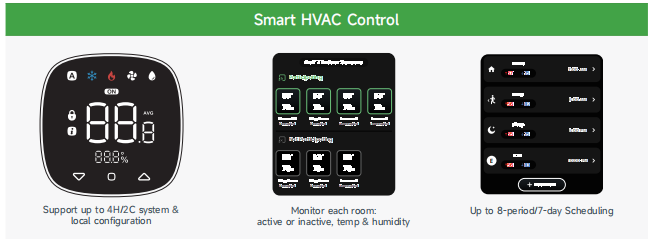
OWON PCT5231: A Programmable WiFi Thermostat for 24VAC HVAC
The OWON PCT5231 programmable WiFi thermostat is designed for compatible North American 24VAC heating and cooling systems.
Key capabilities include:
- 7-day programmable scheduling
- WiFi connectivity and remote control
- Support for compatible conventional and multi-stage heat pump systems
- Up to 4H/2C heat pump configurations
- Auxiliary and emergency heat support
- Dual fuel / hybrid heating compatibility
- Support for up to 10 compatible remote room sensors
- HVAC energy usage reports
- Optional C-wire adapter for applicable retrofit installations
For HVAC distributors, equipment brands, and system integrators, OWON provides OEM/ODM thermostat development and customization services.
The PCT5231 is intended for compatible 24VAC HVAC applications. It should not be assumed to work with line-voltage electric heating or every proprietary HVAC control system.
Frequently Asked Questions
What is the best programmable WiFi thermostat?
The best programmable WiFi thermostat is one that matches the existing HVAC system and provides the scheduling, connectivity, and control features required. Check voltage, heating and cooling stages, C-wire requirements, and app functionality before choosing.
What’s the difference between a WiFi thermostat and a smart thermostat?
A WiFi thermostat provides network connectivity for supported remote functions. A smart thermostat may also include sensors, automation, advanced scheduling, or other intelligent features. Many products offer both.
Can a programmable WiFi thermostat work without a C wire?
Some models support compatible C-wire adapters or alternative approved power arrangements. Installation depends on the thermostat design and existing HVAC wiring.
Can I use a programmable WiFi thermostat with a heat pump?
Yes, provided the thermostat supports the required heat pump stages, reversing valve configuration, and backup heating functions.
How do I connect a programmable thermostat to WiFi?
Typically, users activate pairing mode, connect to the supported WiFi network, and complete setup through the manufacturer’s app. Exact instructions vary by thermostat model.
Conclusion
A programmable WiFi thermostat offers convenient temperature scheduling, remote HVAC control, and flexible comfort management.
For North American installations, the most important factors are 24VAC compatibility, reliable scheduling, WiFi functionality, and correct HVAC wiring.
For distributors, HVAC contractors, and OEM/ODM brands seeking a programmable thermostat for compatible 24VAC systems, OWON offers the PCT5231 as a practical option for residential, multifamily, and light commercial projects.
Contact OWON to discuss programmable WiFi thermostat solutions and OEM/ODM requirements.
Related reading:
[HVAC Automation Solution for Commercial Buildings: A Smart Guide for HVAC Integrators]
Post time: Oct-15-2025


