When comparing smart thermostats, many users search for Smart Thermostat Premium vs Enhanced to understand the differences between high-end and mid-range models. These two categories represent different levels of functionality, design, and HVAC system control.
In this guide, we break down the key differences between premium and enhanced smart thermostats, helping homeowners, HVAC contractors, and smart home brands choose the right solution.
Smart Thermostat Premium vs Enhanced: Key Differences Explained
The main difference between Smart Thermostat Premium vs Enhanced models lies in user experience, feature depth, and system flexibility.
- Premium thermostats focus on advanced features, sensors, and high-end design
- Enhanced models provide essential smart functions with better cost efficiency
Both categories are widely used in North America and typically support standard 24VAC HVAC systems, including furnaces, air conditioners, and heat pumps.
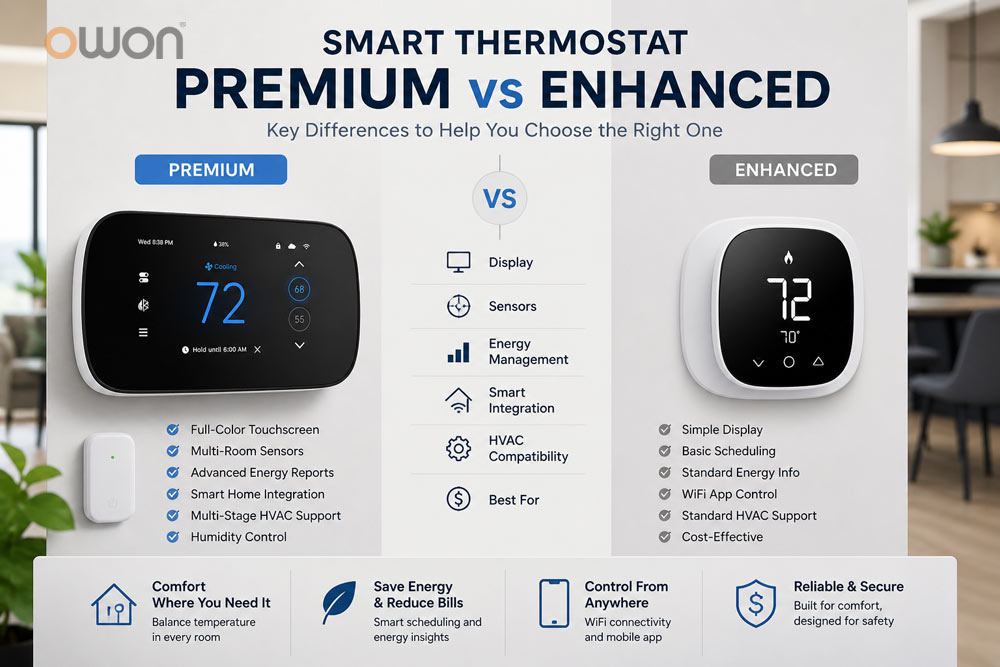
Display and Design
Premium thermostats usually offer a more refined interface:
- Full-color touchscreen display
- Larger screen size
- Modern UI with intuitive navigation
Enhanced thermostats typically include:
- LED or simplified display
- Touch buttons instead of full touchscreen
- Practical and cost-effective design
The display difference directly affects user experience, especially in smart home environments.
Smart Sensors and Room Control
A major difference in Smart Thermostat Premium vs Enhanced models is sensor capability.
Premium models typically support:
- Multiple remote room sensors
- Occupancy detection
- Temperature balancing across different rooms
Enhanced models often provide:
- Basic sensor support
- Single-zone control focus
For example, Owon’s advanced WiFi thermostats PCT533 can integrate multiple room sensors to eliminate hot or cold spots and prioritize comfort in occupied areas. This feature is especially useful in larger homes or multi-room environments.
HVAC Compatibility and Control
Both premium and enhanced thermostats are designed for 24VAC systems, but premium models usually offer broader compatibility.
Typical supported systems include:
- Conventional HVAC systems (2H/2C)
- Heat pumps (up to 4H/2C)
- Dual fuel or hybrid heating systems
Premium thermostats may also support:
- Humidifier and dehumidifier control
- Auxiliary and emergency heating
- Advanced fan control and scheduling
These capabilities make premium models more suitable for complex HVAC setups.
Energy Management Features
Energy efficiency is a key factor when comparing Smart Thermostat Premium vs Enhanced.
Premium thermostats often include:
- Detailed energy usage reports
- Daily, weekly, and monthly tracking
- Adaptive scheduling based on user behavior
Enhanced models typically offer:
- Standard scheduling
- Basic usage insights
For both residential users and property managers, energy tracking can help reduce long-term HVAC operating costs.
Smart Home and Connectivity
Connectivity plays an important role in modern thermostat selection.
Premium models usually support:
- Advanced app control
- Integration with smart home ecosystems
- Cloud-based remote management
Enhanced models also provide WiFi connectivity but may have fewer integration options.
Comparison Table: Smart Thermostat Premium vs Enhanced
| Feature | Premium Thermostat | Enhanced Thermostat |
|---|---|---|
| Display | Full-color touchscreen | LED or basic display |
| Sensors | Multi-room sensors | Limited sensors |
| HVAC Support | Multi-stage, dual fuel | Standard systems |
| Energy Reports | Advanced tracking | Basic scheduling |
| Smart Integration | Full ecosystem support | Basic app control |
Which One Should You Choose
Choosing between Smart Thermostat Premium vs Enhanced depends on your needs and project requirements.
Choose Premium If You Need:
- Multi-room temperature balancing
- Advanced HVAC control
- Energy monitoring and optimization
- High-end user interface
Choose Enhanced If You Want:
- Lower upfront cost
- Reliable basic smart control
- Easy installation
- Compatibility with standard HVAC systems
Real Example: Smart Thermostat Premium vs Enhanced in Practice
To better understand Smart Thermostat Premium vs Enhanced, it helps to look at real-world thermostat configurations used in North America.
Premium-Level Thermostat Example
A premium smart thermostat typically includes:
- 4.3-inch full-color touchscreen interface
- Advanced energy tracking
- Remote room sensor support
- Humidity control for improved comfort
For instance, a WiFi thermostat with a high-resolution touchscreen, multi-room sensor support, and humidifier/dehumidifier control represents a typical premium-level solution.
Such solutions are ideal for users who want a modern interface, better comfort control, and full smart home integration.
Enhanced-Level Thermostat Example
An enhanced thermostat focuses on practical functionality with cost efficiency.
Typical features include:
- LED display with touch-sensitive buttons
- Smart scheduling and temperature control
- Support for remote sensors
- Compatibility with dual fuel HVAC systems
A typical enhanced WiFi thermostat such as OWON’s PCT5231 can still support multi-stage HVAC systems and remote sensors, making it suitable for most residential applications.
These solutions are widely used in residential projects where reliability and affordability are key priorities.
Choosing Between Standard Products and Custom Solutions
While retail thermostats are typically sold as fixed models, many HVAC brands, system integrators, and equipment manufacturers require more flexibility.
Customizable thermostat solutions can offer:
- Feature adjustments based on project needs
- OEM or private label branding
- Integration with IoT platforms and BMS systems
- API support for system-level control
For large-scale residential or light commercial projects, flexible thermostat solutions can provide better long-term value and scalability.
Conclusion
Understanding the differences between Smart Thermostat Premium vs Enhanced helps users make better decisions based on functionality, budget, and system requirements.
Premium thermostats deliver advanced features, enhanced comfort, and deeper system integration, while enhanced models provide reliable and cost-effective solutions for standard HVAC applications.
For HVAC professionals, smart home brands, and system integrators, choosing the right thermostat—or developing a customized solution—can significantly improve performance, energy efficiency, and user experience.
Related reading:
[Commercial HVAC Thermostat Solutions Guide for Smart Buildings (2026)]
Post time: May-04-2026