Introduction
Water leaks can lead to costly damage in both residential and commercial buildings. From small pipe leaks to major system failures, early detection is essential to prevent structural damage, mold growth, and unexpected maintenance costs.
A water leak sensor is one of the most effective solutions for detecting leaks early and enabling fast response. But with so many options available, how do you choose the right solution for your needs?
In this guide, we’ll explore different types of water leak sensors, key features to consider, and how to select the best system for homes and smart buildings.
What Is a Water Leak Sensor?
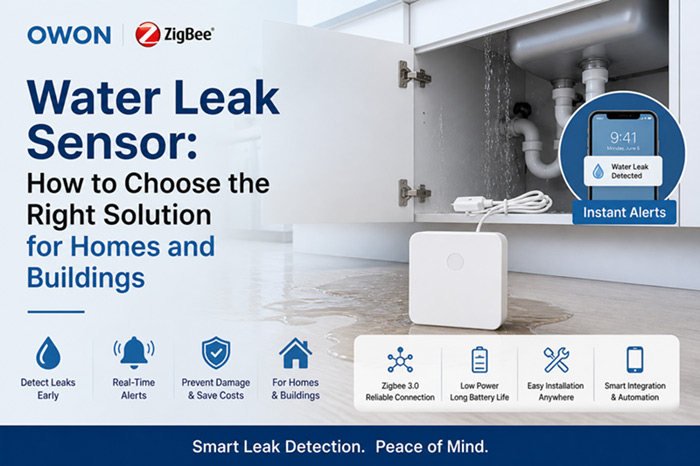
A water leak sensor, also known as a water leak detector or leak detection sensor, is a device designed to detect the presence of water in areas where leaks may occur.
These sensors are typically installed in high-risk locations such as:
- under sinks and kitchen cabinets
- near water heaters and boilers
- inside basements and utility rooms
- around HVAC systems
When water is detected, the sensor triggers an alert, allowing users to take action before damage becomes severe.
Types of Water Leak Sensors
Choosing the right solution starts with understanding the different types of leak detection devices available.
Standalone Water Leak Detectors
These are basic devices that trigger a local alarm when water is detected. They are easy to install but do not provide remote monitoring.
Smart Water Leak Sensors
Smart sensors connect to mobile apps or cloud platforms and provide real-time alerts. These are commonly used in modern homes and smart building systems.
Water Leak Detection Systems
For larger applications such as hotels, apartments, or commercial buildings, a water leak detection system includes multiple sensors connected to a central platform.
These systems enable:
- centralized monitoring
- multi-location deployment
- automated alerts and responses
Key Features to Consider
When selecting a water leak sensor, it’s important to evaluate several key factors.
Real-Time Alerts
A reliable sensor should send instant notifications when a leak is detected. This is essential for minimizing damage.
Installation Flexibility
Look for sensors with flexible installation options, including external probes for hard-to-reach areas.
Power Consumption
Low-power sensors with long battery life are ideal for continuous monitoring.
System Integration
For smart homes and building projects, integration with automation platforms or building management systems is crucial.
Scalability
For commercial projects, the ability to deploy multiple sensors across different locations is a key requirement.

Choosing the Right Solution for Different Applications
Different environments require different leak detection strategies.
For Residential Homes
Homeowners typically need a smart water leak detector that can send alerts directly to a mobile device.
For Apartments and Property Management
Multi-unit properties require centralized monitoring to manage multiple locations efficiently.
For Smart Buildings
Commercial buildings need scalable systems that integrate with automation platforms and enable real-time monitoring across equipment rooms, pipelines, and infrastructure.
Why Smart Leak Detection Matters
Water damage is not only costly but also disruptive. In smart buildings, undetected leaks can lead to:
- equipment failure
- service interruption
- safety risks
A reliable leak detection solution ensures proactive maintenance and improved operational efficiency.
Moving Toward IoT-Based Leak Detection
Modern leak detection solutions are increasingly based on IoT technologies. These systems allow sensors to communicate with gateways, cloud platforms, and mobile applications.
For example, Zigbee-based water leak sensors are widely used in smart building projects due to their low power consumption and reliable wireless communication.
OWON Water Leak Detection Solution
As a manufacturer of IoT devices and smart building solutions, OWON provides reliable water leak detection sensors designed for both residential and commercial applications.
OWON’s solution supports scalable deployment, real-time alerts, and integration with smart systems, making it suitable for smart homes, hotels, and building automation projects.
Conclusion
Choosing the right water leak sensor depends on your application, monitoring needs, and system requirements. From simple detectors to advanced smart systems, the right solution can significantly reduce the risk of water damage.
As smart homes and buildings continue to evolve, investing in a reliable leak detection system is becoming an essential part of modern infrastructure.
Related reading:
[How to Deploy ZigBee Fall Detection Sensors in Care Homes: A Room-by-Room Installation Guide]
Post time: May-02-2026