


Main Features
• 3-phase Modbus energy meter with RS485 Modbus RTU, Modbus TCP, MQTT, and HTTP communication for EMS, BMS, SCADA, PLC, and IoT integration.
• Compatible with single-phase, split-phase, and three-phase four-wire electrical systems.
• Supports up to 3 external CT clamp inputs (80A–750A) for solar PV, battery storage, commercial, and industrial energy monitoring.
• Real-time monitoring of voltage, current, power, frequency, power factor, and energy data.
• Bidirectional energy monitoring for grid import/export measurement, solar generation, and battery energy storage applications.
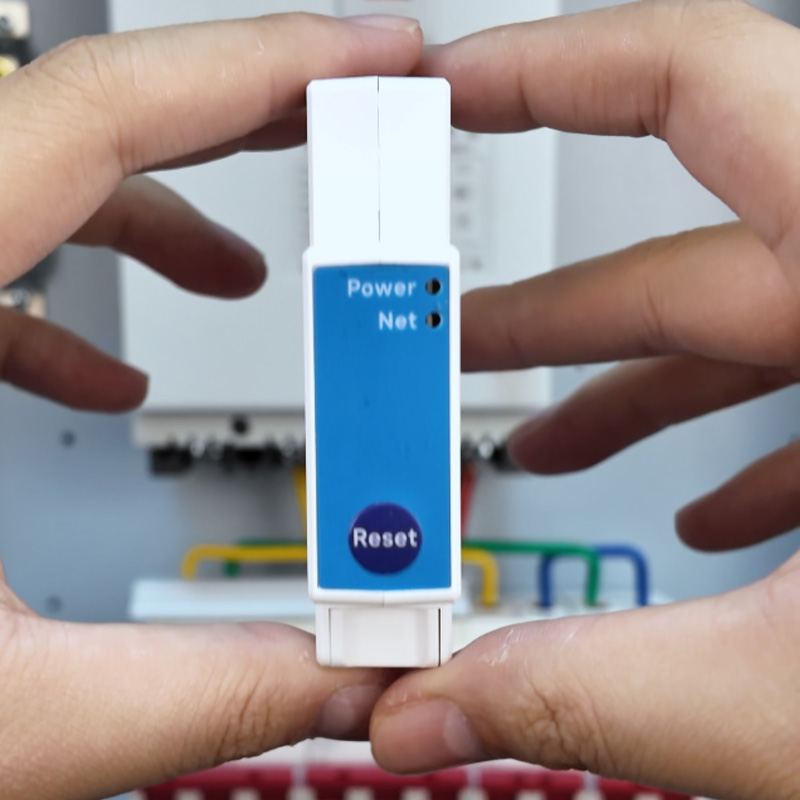
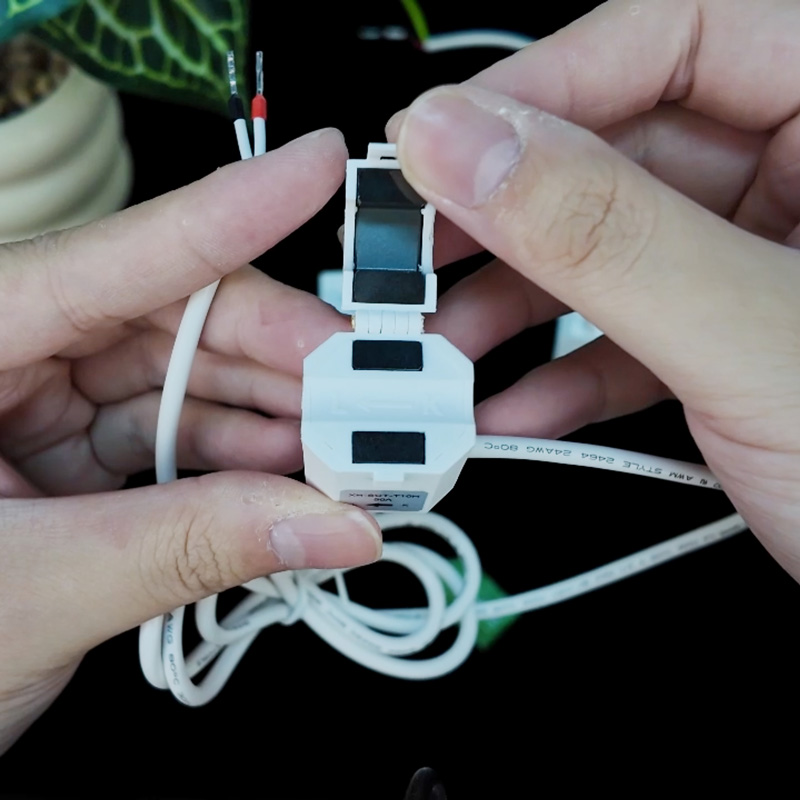

Why Choose PC4713 as a Modbus RS485 Energy Meter
The PC4713 combines CT clamp measurement, RS485 Modbus communication, and bidirectional energy monitoring in a compact DIN-rail design, providing a flexible solution for EMS integration, industrial energy monitoring, solar PV systems, and battery energy storage projects.
| Advantage | Benefit |
| CT Clamp Measurement | No cable cutting or rewiring required |
| RS485 Modbus RTU Communication | Compatible with PLC, SCADA, EMS and BMS platforms |
| Modbus TCP & MQTT Communication | Flexible local and cloud integration |
| Bidirectional Energy Monitoring | Suitable for solar PV and battery storage systems |
| Multi-System Compatibility | Supports single-phase, split-phase and three-phase applications |
With flexible communication options and multiple electrical system compatibility, the PC4713 helps system integrators build scalable energy monitoring solutions for industrial, solar, and energy management applications.
Application Scenarios
• Energy Management Systems (EMS)
• Building Management Systems (BMS)
• Industrial Energy Monitoring
• Solar PV and Energy Storage Systems
• Utility and Commercial Sub-Metering
• Industrial Automation and IoT Energy Monitoring
Industrial Power Monitoring Installation Examples
Three Phase Three Wire
Three Phase Four Wire
FAQ
Q1: What is an RS485 energy meter used for?
A: An RS485 energy meter is commonly used for industrial power monitoring, EMS integration, BMS systems, solar PV monitoring, and energy storage applications where reliable Modbus communication is required.
Q2: Can PC4713 integrate with EMS and BMS platforms?
A: Yes. The PC4713 supports RS485 Modbus RTU, Modbus TCP, MQTT, and HTTP communication, enabling seamless integration with EMS, BMS, SCADA, PLC, and industrial automation platforms.
Q3: Is PC4713 suitable for anti-backflow applications?
A: Yes. The meter provides real-time import and export energy data required for export limitation, zero-export control, and anti-backflow monitoring applications.
Q4: What electrical systems are supported?
A: The PC4713 supports single-phase, split-phase, three-phase 3-wire, and three-phase 4-wire electrical systems.
Q5: What CT options are available for the PC4713?
A: The PC4713 supports external CT clamps from 80A to 750A, making it suitable for commercial buildings, industrial facilities, solar PV systems, battery energy storage systems, and utility sub-metering projects.
Q: What is the difference between a Modbus energy meter and an RS485 energy meter?
A: RS485 is the communication interface, while Modbus RTU is the protocol commonly used over RS485 networks. Therefore, many RS485 energy meters are also referred to as Modbus energy meters in industrial applications.
| Connectivity | |
| Wi-Fi | • 802.11 b/g/n @2.4GHz• HTTP/ MQTT/ Modbus TCP |
| RS485 Port | • Modbus RTU |
| Physical Specifications | |
|
Operating Voltage (RMS for each phase) |
90~277 Vac 50/60Hz |
| Supported Systems | • Single-Phase• Split-Phase• Three-Phase (included 3-Phase, 3-Wire) |
|
Power Consumption
|
• <2W
|
| Voltmeters Accuracy | • ±1% |
| Ammeters Accuracy | • 80A CT: ±1%(1-80A),±2%(0-1A)• 120A CT: ±1%(2-120A),±2%(0-2A)• 200A CT: ±1%(2-200A),±2%(0-2A)• 300A CT: ±1%(6-300A),±2%(2-6A),±5%(0-2A)• 500A CT: ±1%(6-500A),±2%(2-6A),±5%(0-2A)• 750A CT: ±1%(6-750A),±2%(2-6A),±5%(0-2A |
| Data Refresh | • 50ms |
| Response Time | • 50ms(RS485)• 200ms (Wi-Fi) |
| Operating Environment |
• Temperature: -20 ℃~+55 ℃ • Humidity: ≤ 90% non-condensing |
| Mount Type | • 35mm DIN rail mounting |
| Dimension | • 19(W) x 69(D) x 90(H)mm |
| Metering Data | • Voltage • Current • Power Factor • Frequency • Active Power • Reactive Power • Apparent Power |
-

3‑Phase WiFi Smart Power Meter with CT Clamp -PC321
-

3 Phase WiFi Energy Monitor with Ethernet | PC4713
-

WiFi Power Meter with CT Clamp–Single Phase Energy Monitoring
-

ZigBee Clamp Power Meter | Multi-Range 20A–200A
-

WiFi Multi-Circuit Power Meter PC341 | 3-Phase & Split-Phase
-

Single-Phase ZigBee DIN Rail Energy Meter with Dual CT Clamps