As the global population ages, providing safe, comfortable, and dignified care has become a growing priority for families, healthcare providers, and long-term care facilities. One challenge that affects millions of older adults is nighttime urinary incontinence, which can lead to discomfort, skin irritation, sleep disruption, and increased caregiver workload.
A modern bed wetting sensor offers a practical way to detect moisture as soon as it occurs, allowing caregivers to respond quickly and reduce unnecessary routine inspections. Whether used at home or in professional care environments, these sensors are becoming an important part of smart elderly care systems.
What Is a Bed Wetting Sensor?
A bed wetting sensor is a device designed to detect moisture on a bed or sensing pad caused by urine leakage. When moisture is detected, the system immediately triggers an alert so that caregivers can provide timely assistance.
Unlike traditional bed wetting alarms that rely on loud buzzers, many modern systems use wireless communication to send notifications directly to caregivers through mobile applications or centralized monitoring platforms. This approach improves response efficiency while helping preserve the dignity and comfort of elderly individuals.
Why Bed Wetting Detection Matters in Elderly Care
Urinary incontinence is common among older adults, particularly those with reduced mobility, chronic illnesses, or cognitive impairment. If wet bedding is not addressed promptly, it may result in:
- Skin irritation and pressure injuries
- Sleep disturbances
- Increased risk of infection
- Greater caregiver workload
- Reduced quality of life
A reliable bed wetting sensor helps caregivers respond only when needed instead of performing frequent manual checks throughout the night. This not only improves care quality but also allows elderly individuals to enjoy more restful sleep.
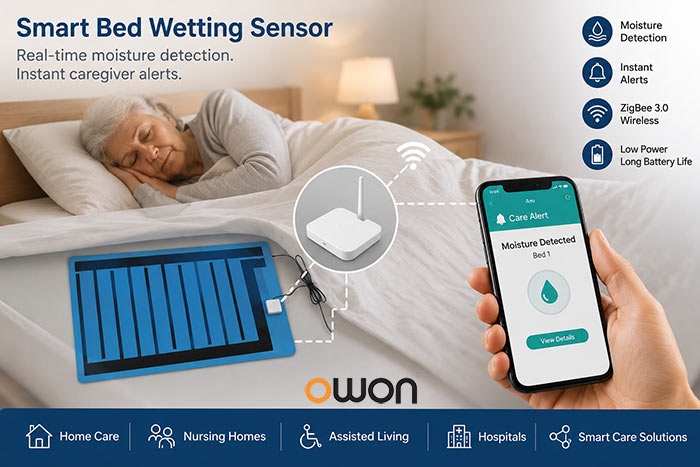
How Modern Bed Wetting Sensors Work
Most modern systems combine a moisture sensing pad with a wireless communication module.
A typical workflow includes:
- Moisture is detected on the sensing pad.
- The sensor immediately identifies the event.
- A wireless alert is transmitted through the local network.
- Caregivers receive an instant notification on their application or monitoring platform.
- Assistance can be provided without unnecessary delay.
Compared with traditional audible alarms, wireless solutions are often quieter, more discreet, and easier to integrate into larger smart care systems.
Where Are Bed Wetting Sensors Commonly Used?
A bed wetting sensor can be deployed in a variety of healthcare and caregiving environments, including:
- Home elderly care
- Assisted living communities
- Nursing homes
- Hospitals
- Rehabilitation centers
- Long-term care facilities
Because these environments often require continuous monitoring for multiple residents, wireless monitoring solutions help caregivers manage care more efficiently while reducing routine inspections.
What Features Should You Look for?
When choosing a bed wetting sensor, buyers should evaluate more than basic moisture detection.
Recommended features include:
- Fast moisture detection
- Reliable wireless communication
- Long battery life
- Easy installation and maintenance
- Stable operation for multi-room deployments
- Compatibility with larger smart care platforms
For professional healthcare projects, selecting a solution that supports system integration can simplify deployment and future expansion.
Example of a ZigBee Bed Wetting Sensor Solution
For example, the OWON ULD926 ZigBee Urine Leakage Detector combines a reusable moisture sensing pad with ZigBee 3.0 wireless connectivity to provide real-time caregiver alerts. Designed for elderly care, nursing homes, assisted living facilities, and smart healthcare projects, it enables prompt response while supporting integration into ZigBee-based monitoring systems.
For organizations already deploying a ZigBee gateway, wireless sensors can also work alongside other healthcare devices such as bed presence sensors, fall detection sensors, and emergency panic buttons to create a more comprehensive elderly monitoring solution.
The Future of Smart Elderly Care
As healthcare providers continue adopting IoT technologies, smart monitoring solutions are becoming increasingly important in improving care quality while reducing operational costs.
Rather than replacing caregivers, a bed wetting sensor helps them focus their attention where it is needed most. Combined with other wireless healthcare devices, these sensors support a safer, more responsive, and more efficient care environment for both caregivers and elderly individuals.
Conclusion
Bed wetting is a common challenge in elderly care, but modern monitoring technologies make it easier to manage with dignity and efficiency.
By providing real-time moisture detection and timely caregiver alerts, a bed wetting sensor can improve hygiene, reduce unnecessary nighttime checks, and enhance comfort across home care, assisted living communities, nursing homes, and healthcare facilities.
As smart healthcare continues to evolve, wireless monitoring devices will play an increasingly important role in supporting safer and more connected elderly care environments.
FAQs
What is a bed wetting sensor?
A bed wetting sensor detects moisture caused by urine leakage and sends an alert so caregivers can respond promptly.
How does a bed wetting sensor work?
The sensor monitors a moisture sensing pad placed on the bed. Once moisture is detected, it immediately sends a notification through the connected monitoring system.
Are bed wetting sensors suitable for nursing homes?
Yes. Many nursing homes and assisted living facilities use bed wetting sensors to improve care efficiency while reducing unnecessary manual inspections.
Can a bed wetting sensor be integrated into a smart care system?
Yes. Many modern solutions support wireless technologies such as ZigBee, allowing integration with gateways and broader healthcare monitoring platforms.
What is the difference between a bed wetting sensor and a bed wetting alarm?
A traditional bed wetting alarm typically produces an audible alert near the bed. A bed wetting sensor, especially in wireless systems, can send remote notifications to caregivers or monitoring platforms, making it more suitable for elderly care and professional healthcare environments.
Related reading:
[Bed Presence Monitoring Solutions for Safer Elderly Care Facilities]
Post time: Jul-10-2026