Heat pump systems require thermostats that can correctly manage heating, cooling, auxiliary heat, and emergency heat functions.
For HVAC contractors, installers, and system integrators, selecting the right heat pump thermostat with emergency heat is critical because thermostat compatibility directly affects system performance, installation reliability, and customer satisfaction.
Unlike conventional HVAC systems, heat pumps rely on reversing valve control and may use additional heating sources during colder conditions. Therefore, professionals should carefully evaluate HVAC configuration, wiring requirements, and thermostat capabilities before replacement or retrofit projects.
A compatible 24VAC HVAC thermostat provides reliable control for modern heat pump applications, including auxiliary heat, emergency heat, multi-stage operation, and smart HVAC management.
What Is Emergency Heat on a Heat Pump Thermostat?
Emergency heat is a backup heating mode used in heat pump systems when the primary heat pump operation is unavailable or additional backup heating is required.
Emergency heat typically controls secondary heating sources such as:
- Electric heat strips
- Gas furnace backup systems
- Other auxiliary heating equipment
When emergency heat is activated, the thermostat manages the backup heating source without relying on normal heat pump operation.
A properly selected heat pump thermostat with emergency heat should support the required Emergency Heat function and match the HVAC wiring configuration.
Auxiliary Heat vs Emergency Heat: What Is the Difference?
HVAC professionals often need to explain the difference between auxiliary heat and emergency heat when selecting or replacing thermostats.
| Feature | Auxiliary Heat | Emergency Heat |
|---|---|---|
| Purpose | Supports heat pump operation | Backup heating mode |
| Activation | Usually automatic | Usually manual |
| Heat pump operation | Continues operating | Usually disabled |
Auxiliary heat automatically assists the heat pump when additional heating capacity is required.
Emergency heat is used when the heat pump cannot operate normally or when backup heating is preferred.
Understanding these differences is especially important when selecting advanced solutions such as a dual fuel thermostat for hybrid heating systems.
Heat Pump Thermostat Compatibility Checklist
Before choosing a heat pump thermostat with emergency heat, HVAC professionals should verify several key requirements.
Heat Pump Configuration Support
The thermostat should support the required HVAC system type, including:
- Single-stage heat pumps
- Multi-stage heat pumps
- Auxiliary heat systems
- Dual fuel and hybrid heat systems
Different HVAC configurations require different thermostat control logic.
AUX and Emergency Heat Wiring
Many heat pump systems use:
- AUX terminal
- E terminal
- AUX/E combined terminal
The selected thermostat must match the existing wiring configuration to ensure correct heating operation.
O/B Reversing Valve Control
Heat pumps require proper reversing valve control for heating and cooling operation.
Depending on the HVAC equipment, thermostats may need to support:
- O configuration
- B configuration
Incorrect settings can affect system performance and comfort.
C-Wire and Power Requirements
Smart thermostats require stable power for:
- WiFi communication
- Remote access
- Scheduling functions
- Advanced HVAC control
Before replacement, installers should confirm whether a C-wire connection or compatible power solution is available.
Smart Thermostat with Emergency Heat: Benefits for HVAC Projects
A smart thermostat with emergency heat provides more than basic temperature adjustment.
For modern HVAC projects, smart features can improve system management through:
Remote HVAC Management
Authorized users can monitor and adjust thermostat settings remotely.
This is useful for:
- Property managers
- HVAC service providers
- Multi-location facilities
Scheduling and Energy Optimization
Smart scheduling helps optimize heating operation based on occupancy patterns and comfort requirements.
Multi-Zone Comfort Control
Remote sensors and smart control functions can improve temperature balance in larger homes, apartments, and light commercial buildings.
A modern WiFi HVAC thermostat can combine heat pump compatibility with remote management, scheduling, and connected HVAC control.
Example: OWON Heat Pump Thermostat Solution
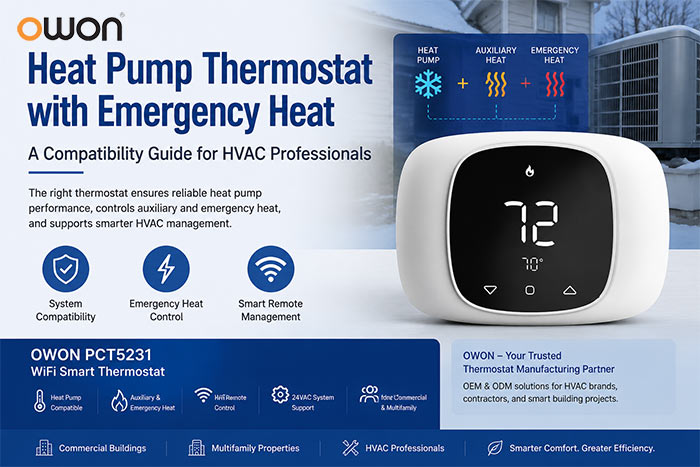
For North American HVAC applications, the OWON PCT5231 WiFi thermostat is designed to support advanced heat pump configurations.
The PCT5231 supports:
- 24VAC HVAC systems
- Heat pump operation
- Auxiliary heat
- Emergency heat control
- Dual fuel / hybrid heat systems
- Multi-stage heating and cooling
- Remote room sensors
- WiFi remote management
These features make it suitable for HVAC contractors and system integrators working on heat pump replacement, retrofit, and smart HVAC projects.
For example, when upgrading an existing heat pump installation, selecting a compatible thermostat can help maintain proper HVAC operation while adding modern smart control features.
As an experienced thermostat manufacturer, OWON provides OEM and ODM thermostat solutions for HVAC brands, distributors, system integrators, and smart building companies requiring customized hardware, firmware, and platform integration.
How HVAC Professionals Choose the Right Thermostat
Before installation, professionals should evaluate:
HVAC Compatibility
Confirm:
- Heat pump type
- Heating and cooling stages
- Auxiliary heat requirements
- Emergency heat configuration
Wiring Requirements
Review:
- R terminal
- C terminal
- O/B reversing valve
- AUX terminal
- Emergency heat terminal
Future Project Requirements
For smart HVAC applications, consider:
- Remote management
- Mobile app integration
- Energy monitoring
- Multi-zone support
- OEM customization
Choosing the right HVAC thermostat solution helps improve installation reliability and long-term system performance.
Frequently Asked Questions
What is emergency heat on a thermostat?
Emergency heat is a backup heating mode that uses auxiliary heating equipment when the heat pump cannot provide normal heating.
Can a smart thermostat control emergency heat?
Yes. A compatible smart thermostat with emergency heat support can manage backup heating functions when correctly configured.
Is emergency heat the same as auxiliary heat?
No. Auxiliary heat assists normal heat pump operation, while emergency heat uses backup heating without relying on the outdoor heat pump.
What thermostat works with a heat pump with emergency heat?
A compatible thermostat should support heat pump operation, AUX/E terminals, reversing valve control, and the required heating stages.
Conclusion
Selecting the right heat pump thermostat with emergency heat is essential for reliable HVAC performance.
For HVAC professionals, thermostat compatibility with auxiliary heat, emergency heat, wiring configuration, and heat pump stages should always be considered before installation.
Smart thermostat solutions provide additional benefits, including remote management, scheduling, and improved HVAC control.
For HVAC brands, contractors, and system integrators, working with an experienced thermostat manufacturer helps create reliable solutions for modern heat pump applications.
Post time: Jul-28-2026