As energy efficiency standards continue to rise across North America, more homes and light commercial buildings are adopting dual fuel HVAC systems—a hybrid solution that combines a heat pump with a furnace for optimal performance in varying weather conditions.
However, to fully unlock the benefits of a hybrid system, choosing the right dual fuel thermostat is critical. A standard thermostat cannot properly manage system switching, energy optimization, or multi-stage control.
In this guide, we’ll explain how a hybrid heat thermostat works, why it matters, and how to choose the best thermostat for dual fuel HVAC systems.
What Is a Dual Fuel HVAC System?
A dual fuel system (also called a hybrid heat system) combines:
- Heat pump → efficient in mild temperatures
- Gas furnace → powerful heating in extreme cold
Instead of relying on one system year-round, a dual fuel setup automatically switches between the two based on outdoor temperature or efficiency thresholds.
This approach is widely used in:
- Residential homes in cold climates
- Multi-family apartments
- Light commercial buildings
- Energy efficiency upgrade projects
How Does a Dual Fuel Thermostat Work?
A thermostat for dual fuel system acts as the control center that determines:
- When to use the heat pump
- When to switch to the furnace
- How to manage auxiliary heat stages
Unlike basic thermostats, a hybrid heat thermostat must support:
- Multi-stage heating and cooling
- Auxiliary (AUX) heat control
- Emergency heat function
- Smart switching logic
For example:
- At 40–60°F → heat pump runs (efficient)
- Below ~35°F → system switches to furnace
- During extreme cold → auxiliary heat engages
This intelligent switching is essential to avoid energy waste and maintain indoor comfort.

Why You Need a Hybrid Heat Thermostat
Installing a dual fuel system without a proper thermostat can lead to:
- Poor system switching
- Higher energy costs
- Uneven indoor temperature
- Increased HVAC wear
A smart dual fuel thermostat solves these issues by:
1. Optimizing Energy Efficiency
Automatically selects the most efficient heating source based on conditions.
2. Improving Comfort
Maintains stable indoor temperature without frequent fluctuations.
3. Reducing System Wear
Prevents unnecessary switching and short cycling.
4. Supporting Advanced HVAC Logic
Handles multi-stage heating and cooling scenarios effectively.
Why Dual Fuel Thermostats Are Growing in North America
The North American HVAC market is experiencing a significant shift toward heat pump adoption as homeowners, property managers, and utility companies look for ways to improve energy efficiency and reduce heating costs. While heat pumps provide excellent efficiency in mild and moderate temperatures, their performance can decline during extremely cold weather. As a result, many HVAC professionals are turning to dual fuel systems that combine a heat pump with a gas furnace or other secondary heating source.
A dual fuel thermostat plays a critical role in this system by automatically selecting the most efficient heating source based on outdoor conditions and system settings. During milder weather, the heat pump operates as the primary heat source. When outdoor temperatures fall below a predefined balance point, the thermostat can switch to the furnace to maintain comfort and system efficiency.
This approach offers several advantages. It can reduce energy consumption, improve indoor comfort, extend equipment lifespan, and help property owners optimize operating costs throughout the heating season. As utility rebate programs and energy-efficiency initiatives continue expanding across North America, demand for intelligent dual fuel control solutions is expected to grow further.
For HVAC manufacturers, system integrators, and thermostat suppliers, dual fuel technology has become an increasingly important feature in modern smart thermostat development, particularly for heat pump retrofits, hybrid heating systems, and energy-conscious residential projects.
Key Features to Look for in a Dual Fuel Thermostat
When selecting a thermostat for a hybrid HVAC system, compatibility is only the first step. For North American HVAC applications, the following features are essential:
Multi-Stage HVAC Control
A proper multi stage thermostat can manage:
- 2-stage heating / cooling
- Heat pump + auxiliary heat
- Furnace backup
This ensures smooth transitions between energy sources.
24VAC HVAC Compatibility
Most North American systems use low-voltage control.
A reliable HVAC thermostat 24V should support:
- Rc / Rh / C wiring
- Heat pump terminals (O/B)
- Auxiliary and emergency heat
Smart Connectivity and Remote Control
Modern buildings require remote access.
A WiFi thermostat for heat pump allows:
- Mobile app control
- Cloud-based monitoring
- Integration with smart home systems
Remote Sensor Support (Zoning Capability)
Temperature can vary across rooms.
A thermostat with remote sensors can:
- Balance hot and cold spots
- Prioritize occupied spaces
- Improve overall comfort
Humidity Control Integration
Indoor air quality is increasingly important.
A thermostat with humidity control can:
- Manage humidifiers / dehumidifiers
- Improve comfort in winter and summer
- Prevent mold or dryness issues
Outdoor Temperature Control in Dual Fuel Systems
One of the most important factors in dual fuel system performance is how the thermostat determines when to switch between the heat pump and the secondary heating source. This decision is often based on outdoor temperature data.
In a typical dual fuel system, the heat pump operates efficiently above a certain outdoor temperature threshold, commonly referred to as the balance point. Once outdoor temperatures fall below that threshold, the thermostat may activate the furnace or auxiliary heating system to maintain comfort while preventing excessive energy consumption.
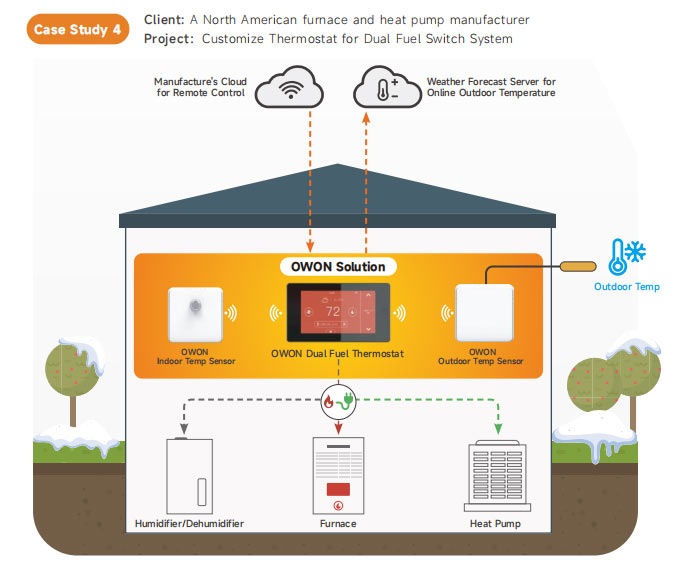
There are several ways modern dual fuel thermostats obtain outdoor temperature information. Some systems use dedicated outdoor temperature sensors installed near the HVAC equipment. Others utilize wireless sensors or cloud-based weather data to help determine the optimal heating source.
For commercial HVAC designers and smart thermostat manufacturers, outdoor temperature awareness provides several benefits:
- More accurate heat source switching
- Improved heat pump efficiency
- Reduced auxiliary heating runtime
- Better indoor comfort during extreme weather
- Lower seasonal heating costs
As heat pump adoption continues to increase throughout North America, outdoor temperature-based control is becoming a standard requirement for many advanced dual fuel thermostat applications. It allows HVAC systems to operate more intelligently while maximizing the benefits of hybrid heating technology.
WiFi Dual Fuel Thermostats vs Traditional Dual Fuel Thermostats
Traditional dual fuel thermostats can successfully manage switching between a heat pump and a secondary heating source, but modern WiFi-enabled thermostats provide significantly greater flexibility, visibility, and control.
A conventional thermostat typically relies on local settings and manual adjustments. In contrast, a WiFi dual fuel thermostat allows users, facility managers, and HVAC service providers to remotely monitor and adjust system operation through mobile applications or cloud platforms.
For HVAC professionals and building operators, WiFi connectivity offers several operational advantages:
| Feature | Traditional Dual Fuel Thermostat | WiFi Dual Fuel Thermostat |
|---|---|---|
| Remote Access | No | Yes |
| Mobile App Control | No | Yes |
| Energy Usage Monitoring | Limited | Yes |
| Remote Diagnostics | No | Yes |
| Smart Scheduling | Basic | Advanced |
| Multi-Room Sensor Support | Limited | Available |
| Software Updates | No | Yes |
Modern WiFi dual fuel thermostats can also integrate with smart home ecosystems, building management systems, and energy management platforms. Features such as remote room sensors, occupancy-based control, energy reporting, and automated scheduling help improve comfort while reducing energy waste.
For OEM manufacturers, HVAC brands, and smart building solution providers, WiFi-enabled dual fuel thermostats represent the next generation of HVAC control technology. They not only optimize hybrid heating performance but also provide the connectivity and data visibility increasingly demanded by today’s energy-conscious customers.
OWON Dual Fuel Thermostat Solution (Recommended)
For HVAC professionals, system integrators, and OEM buyers, selecting a thermostat that supports all hybrid system requirements is essential.
The OWON PCT533 WiFi Thermostat is designed specifically for advanced HVAC applications.
Key Capabilities:
- Supports dual fuel / hybrid heat systems
- Compatible with 2-stage heating and cooling systems
- Works with heat pumps and furnaces
- Built-in humidity control (HUM / DEHUM)
- WiFi connectivity for remote management
- 7-day programmable scheduling
- Supports remote sensors for zone-based comfort
This makes it ideal for:
- Residential HVAC upgrades
- Smart apartment solutions
- Light commercial HVAC systems
- OEM and private label projects
Typical Applications of Dual Fuel Thermostats
A hybrid heat thermostat is widely used in:
Residential Homes
- Cold climate regions
- Energy-saving retrofit projects
Apartments and Multi-Family Buildings
- Zoned comfort control
- Centralized HVAC management
Light Commercial Buildings
- Offices
- Retail spaces
- Hospitality
Frequently Asked Questions
Q: What is the difference between a dual fuel system and a heat pump system?
A standard heat pump system relies primarily on electricity for both heating and cooling. A dual fuel system combines a heat pump with a gas furnace or other secondary heating source. The thermostat automatically switches between the two systems to maximize comfort and energy efficiency based on outdoor conditions.
Q: Can any thermostat work with a dual fuel system?
No. Dual fuel systems require a thermostat that supports heat pump operation, auxiliary heating, and dual fuel changeover logic. When selecting a thermostat, verify compatibility with multi-stage heat pump systems and hybrid heating applications.
Q: Do dual fuel thermostats require an outdoor sensor?
Not always. Some dual fuel thermostats use a dedicated outdoor temperature sensor to determine when to switch between the heat pump and furnace. Others can utilize internet weather data or built-in control algorithms. Outdoor temperature information helps optimize system efficiency and heating performance.
Q: What temperature should a dual fuel system switch from heat pump to furnace?
Most dual fuel systems are configured to switch from heat pump operation to furnace heating when outdoor temperatures fall between 30°F and 40°F (-1°C to 4°C). The optimal balance point depends on climate conditions, equipment efficiency, utility costs, and comfort requirements.
Q: What features should I look for in a WiFi dual fuel thermostat?
Key features include dual fuel compatibility, multi-stage heat pump support, WiFi connectivity, smart scheduling, remote room sensor support, energy usage monitoring, and mobile app control. These capabilities help improve comfort while reducing heating costs.
Q: Can a WiFi dual fuel thermostat reduce HVAC operating costs?
Yes. A WiFi dual fuel thermostat can improve efficiency by optimizing heating source selection, enabling smart scheduling, providing remote control, and reducing unnecessary HVAC runtime. Properly configured dual fuel systems often achieve lower seasonal heating costs than single-source heating systems.
Conclusion
As HVAC systems evolve toward higher efficiency and smarter control, dual fuel systems are becoming a standard choice in North America.
However, system performance heavily depends on choosing the right dual fuel thermostat.
A modern hybrid heat thermostat not only ensures compatibility with 24VAC HVAC systems but also delivers:
- Intelligent system switching
- Improved indoor comfort
- Reduced energy consumption
- Enhanced control through smart features
For HVAC professionals and system integrators, selecting a solution like the OWON PCT533 can significantly simplify deployment while delivering advanced performance.
Related reading:
[Occupancy Sensors for HVAC: How Smart Thermostats Improve Energy Efficiency in Modern Buildings]
Post time: Mar-27-2026