Introduction: What Is a Multi Zone Thermostat and Why It Matters
A multi zone thermostat is a key component in modern HVAC systems, allowing independent temperature control across different rooms or zones.
In North America, multi zone HVAC systems are widely used in homes, apartments, and commercial buildings to improve comfort, reduce energy waste, and eliminate hot and cold spots.
For HVAC professionals and system integrators, choosing the right multi zone thermostat is essential for building efficient and scalable zoning solutions.
This guide explains how multi zone thermostat systems work, their key benefits, and how to choose the right solution for modern HVAC applications.
In commercial buildings and high-end residential projects, temperature consistency has become a critical measure of space quality. Traditional single-point thermostat systems fail to address zone temperature variations caused by solar exposure, space layout, and equipment heat loads. Multi-zone smart thermostat systems with remote sensors are emerging as the preferred solution for HVAC professionals across North America.
What Is a Multi Zone Thermostat?
A multi zone thermostat is a smart HVAC control system that manages temperature across multiple rooms or zones using remote sensors and centralized control logic. Instead of relying on a single wall-mounted thermostat, the system collects data from multiple points to optimize heating and cooling performance.
This approach is commonly used in multi zone HVAC systems to:
- Balance temperature differences between rooms
- Improve comfort in occupied areas
- Reduce energy waste in unused spaces
- Enable room-by-room climate control

1. Technical Principles and Architectural Advantages of Multi-Zone Temperature Control
1.1 Core Operating Modes
- Central control unit + distributed sensor architecture
- Dynamic data collection and adaptive adjustment
- Intelligent scheduling based on actual usage patterns
1.2 Technical Implementation
Using a typical multi zone thermostat platform (such as OWON’S PCT5231) as an example:
- Supports up to 10 remote sensors for true multi-zone temperature control
- 2.4GHz Wi-Fi and BLE connectivity for reliable communication
- Compatible with most 24V HVAC systems, including furnaces, AC units, and heat pumps
- Supports dual fuel and hybrid heat systems
- Enables prioritized heating and cooling based on specific room conditions
This architecture allows the thermostat to dynamically balance temperature across different rooms, effectively eliminating hot and cold spots.
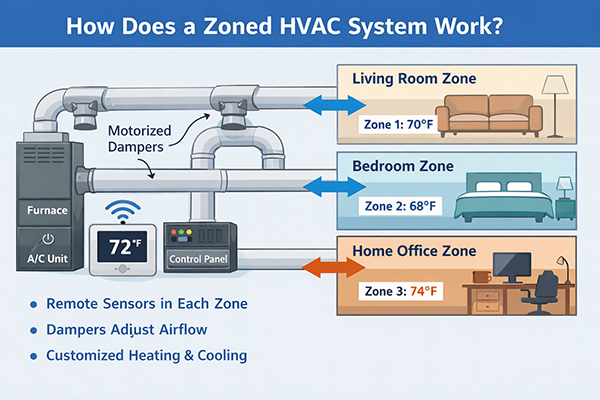
How Does a Zoned HVAC System Work?
A zoned HVAC system divides a building into multiple temperature-controlled areas (zones), each managed independently based on real-time data.
In a smart multi zone thermostat system:
- Remote sensors measure temperature and occupancy in each zone
- The thermostat analyzes data and adjusts HVAC output accordingly
- Airflow and heating/cooling cycles are optimized for each space
For HVAC system integrators and smart building solution providers, choosing a WiFi thermostat with remote sensors is essential for building scalable and efficient zoning systems.
Some multi zone thermostat solutions (e.g., PCT5231) support up to 10 remote sensors for advanced zoning control, making them ideal for homes, apartments, and light commercial buildings that require room-by-room comfort control. With remote sensors, these systems help balance hot and cold spots and optimize HVAC performance.
2. Critical Challenges in Commercial HVAC Applications
2.1 Temperature Management Issues
- Hot/cold spots in large open areas
- Varying occupancy patterns throughout the day
- Solar heat gain differences across building orientations
2.2 Operational Challenges
- Energy waste in unoccupied zones
- Complex HVAC system management
- Meeting evolving ESG reporting requirements
- Compliance with building energy codes
Benefits of a Multi Zone Thermostat System
A smart multi zone thermostat provides significant advantages for both residential and commercial HVAC systems:
- Improved Comfort: Personalized temperature control for each room
- Energy Efficiency: Reduced HVAC runtime in unused areas
- Lower Costs: Decreased energy consumption and maintenance needs
- Scalability: Ideal for apartments, hotels, and large buildings
Single vs Multi Zone Thermostat Comparison
| Feature | Single Thermostat | Multi Zone Thermostat |
|---|---|---|
| Temperature Control | One setting for entire building | Independent control for each room/zone |
| Comfort Level | Uneven (hot/cold spots) | Balanced and personalized comfort |
| Energy Efficiency | Wastes energy in unused areas | Optimizes energy based on occupancy |
| System Complexity | Simple setup | Advanced control with sensors |
| Best Applications | Small homes | Apartments, hotels, offices |
3. Advanced Multi-Zone Solutions for Professional Applications
3.1 System Architecture
- Centralized control with decentralized execution
- Real-time temperature mapping across zones
- Adaptive learning of occupancy patterns
3.2 Key Technical Features
- Zone-specific scheduling (7-day programmable)
- Occupancy-based automation
- Energy consumption analytics (daily/weekly/monthly)
- Remote system monitoring and diagnostics
3.3 OWON’s Engineering Approach
- Industrial-grade components rated for -10°C to 50°C
- Reliable wireless communication between thermostat and sensors
- Dual-fuel and hybrid heat compatibility
- Scalable architecture for multi-room deployments
4. Professional Application Scenarios
4.1 Commercial Office Buildings
Challenge: Varying occupancy across departments
Solution: Zone-based scheduling with sensor-driven control
Result: 18–25% reduction in HVAC energy costs
4.2 Multi-Family Residential
Challenge: Individual tenant comfort preferences
Solution: Remote sensor-based zone control with centralized management
Result: Reduced service calls and improved tenant satisfaction
Especially suitable for smart thermostat for apartments deployments
4.3 Hotels and Hospitality
Challenge: Different room usage patterns and guest preferences
Solution: Multi-zone temperature control with remote management
Result: Improved guest comfort and operational efficiency
5. Technical Specifications for Professional Deployment
5.1 System Requirements
- 24VAC power supply (50/60 Hz)
- Standard HVAC wiring compatibility
- 2-stage heating and cooling support
- Heat pump with auxiliary heat capability
5.2 Installation Considerations
- Wall-mounted thermostat with flexible placement
- Wireless sensor positioning for optimal coverage
- System calibration and commissioning
- Integration with smart home or building systems
6. Customization Capabilities for OEM/ODM Partners
6.1 Hardware Customization
- Custom branding and enclosure design
- Flexible sensor configurations
- Display and interface customization
6.2 Software Customization
- White-label mobile applications
- Custom dashboards and reporting
- Integration with proprietary platforms
- API-based system connectivity
7. Implementation Best Practices
7.1 System Design Phase
- Conduct zoning analysis for building layout
- Identify optimal sensor placement
- Plan system scalability
7.2 Installation Phase
- Ensure HVAC compatibility
- Calibrate sensors
- Validate communication stability
7.3 Operational Phase
- Train maintenance staff
- Monitor system performance
- Schedule regular system checks
8. How to Choose a Multi Zone Thermostat for HVAC Systems
When selecting a multi zone thermostat, HVAC professionals should consider the following factors:
- Number of supported zones and remote sensors
- Compatibility with 24VAC HVAC systems
- Support for heat pump and dual fuel configurations
- Integration capability (Wi-Fi, API, or BMS systems)
- OEM/ODM customization flexibility
A well-designed multi zone thermostat for HVAC systems should balance performance, scalability, and ease of integration for long-term deployment.
9. Frequently Asked Questions (FAQ)
Q1: What is a multi zone thermostat?
A: It allows independent temperature control across multiple rooms using remote sensors and smart control logic.
Q2: Is a multi zone thermostat worth it?
A: Yes. It improves comfort, reduces energy waste, and enhances HVAC efficiency.
Q3: Can it work with 24V HVAC systems?
A: Yes. Systems like the PCT5231 are fully compatible with standard 24VAC HVAC setups.
Q4: Is this suitable for apartments or hotels?
A: Absolutely. Multi-zone systems are widely used in multi-family and hospitality applications.
10. Conclusion: The Future of Smart HVAC Zoning
Multi zone thermostat systems represent the next evolution in HVAC control. By enabling room-by-room temperature management, they deliver superior comfort, improved energy efficiency, and scalable solutions for modern buildings.
For HVAC professionals, system integrators, and smart home brands, adopting smart multi zone thermostat solutions is essential for staying competitive in the North American market.
OWON’s WiFi thermostat platforms, including models like PCT5231 and PCT533, can serve as reference solutions for building advanced multi-zone HVAC control systems. For projects requiring enhanced indoor comfort and humidity management, the PCT533 can be considered as an advanced alternative.
Related reading:
[ Dual Fuel Thermostat: Smart Control for Hybrid HVAC Systems ]
Post time: Nov-14-2025


