Introduction
Across North America, more homes are switching to heat pump and dual fuel HVAC systems as energy costs continue rising and efficiency standards become stricter. However, many homeowners discover that older thermostats are not designed to properly manage modern multi-stage HVAC equipment.
A common issue in heat pump systems is unnecessary auxiliary heat usage during cold weather. In dual fuel systems, poor thermostat control can also cause inefficient switching between the heat pump and gas furnace, leading to higher utility bills and uneven indoor comfort.
This is why many HVAC contractors and property owners are upgrading to a programmable thermostat for heat pump systems with smarter scheduling, multi-stage compatibility, and advanced HVAC control logic.
Modern programmable WiFi thermostats can help improve comfort, reduce HVAC runtime, and simplify temperature management across residential and light commercial buildings.
What Is a Programmable Thermostat for Heat Pump HVAC?
A programmable thermostat for heat pump HVAC systems is designed to manage more complex heating and cooling operations than traditional single-stage thermostats.
Unlike basic thermostats, heat pump-compatible models often support:
- Multi-stage heating and cooling
- Auxiliary heat control
- Emergency heat
- Automatic heating/cooling changeover
- Dual fuel switching
- 7-day programmable scheduling
- Remote HVAC access via mobile apps
These functions help optimize HVAC operation under changing outdoor temperatures and occupancy conditions.

Why Heat Pump Systems Require Smarter Thermostat Control
In many older homes, thermostats were originally installed for simple furnace and air conditioning systems.
When homeowners later upgrade to heat pumps, problems may appear such as:
- Auxiliary heat activating too frequently
- Short cycling
- Uneven room temperatures
- Delayed temperature recovery
- Higher electricity usage during winter
A modern heat pump WiFi thermostat helps manage these situations more efficiently by controlling staging logic and HVAC schedules more accurately.
Understanding Dual Fuel HVAC Systems
A dual fuel HVAC system combines:
- A heat pump
- A secondary heating source (usually a gas furnace)
During mild outdoor temperatures, the heat pump operates efficiently. When temperatures drop further, the system automatically switches to gas heating for better performance and comfort.
Without proper thermostat logic, dual fuel systems may:
- Switch heating sources too often
- Waste energy
- Reduce indoor comfort stability
This is why many HVAC installers prefer programmable thermostats that support intelligent dual fuel control and outdoor temperature-based switching.
Real Benefits of a Programmable Heat Pump Thermostat
Lower Energy Usage
In many homes, HVAC systems continue operating even when rooms are unoccupied.
Programmable scheduling allows homeowners to automatically reduce heating or cooling during:
- Work hours
- Overnight periods
- Vacations
- School hours
This helps improve overall HVAC efficiency without sacrificing comfort.
Better Temperature Consistency
In two-story homes, upstairs rooms often become warmer in summer and colder in winter.
Some programmable thermostats support remote room sensors that monitor temperature in different rooms instead of relying only on the hallway thermostat.
This helps reduce hot and cold spots throughout the home.
Improved Comfort During Seasonal Changes
Heat pump systems perform differently depending on outdoor temperatures.
Advanced programmable thermostats can automatically adjust HVAC operation based on changing heating demands, helping maintain more stable indoor comfort during winter transitions.
Traditional Thermostats vs Programmable Heat Pump Thermostats
As heat pump adoption continues growing across North America, many older thermostats are unable to fully support modern HVAC system requirements.
The comparison below highlights the practical differences between traditional thermostats and modern programmable thermostat platforms designed for heat pump and dual fuel HVAC systems.
Traditional Thermostats vs Heat Pump Programmable Thermostats
| Feature | Traditional Thermostat | Programmable Heat Pump Thermostat |
|---|---|---|
| Heat Pump Compatibility | Basic | Advanced multi-stage support |
| Auxiliary Heat Control | Limited | Intelligent staging |
| Emergency Heat Support | Rare | Supported |
| Dual Fuel Switching | No | Supported |
| 7-Day Scheduling | Limited | Advanced |
| Remote App Control | No | Yes |
| Remote Room Sensors | No | Supported |
| HVAC Energy Monitoring | No | Available |
Compared with older thermostats, programmable WiFi thermostats provide better HVAC optimization and more flexible control for modern heat pump systems.
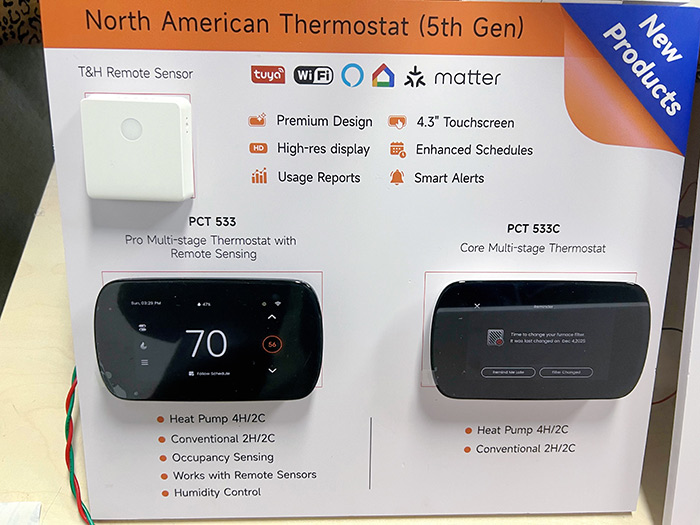
Example Programmable Thermostat Platform for Heat Pump Systems
As one example implementation, the OWON PCT533 programmable WiFi thermostat supports:
- Multi-stage heat pump systems
- Dual fuel / hybrid heat systems
- 7-day programmable scheduling
- Remote room sensors
- Humidity monitoring
- Mobile app control
- HVAC energy management
The thermostat is designed for North American 24VAC HVAC systems commonly used in residential and light commercial environments.
Some programmable thermostat platforms also support occupancy sensing and remote HVAC monitoring, helping improve comfort while reducing unnecessary HVAC runtime.
Common Applications
Residential Heat Pump Homes
Programmable scheduling helps homeowners reduce unnecessary HVAC runtime while maintaining comfort during occupied hours.
Dual Fuel Retrofit Projects
Many older homes upgrading to hybrid heating systems require thermostats compatible with both heat pumps and gas furnaces.
Apartments & Multi-Family Housing
Remote HVAC management and scheduling simplify maintenance and improve energy efficiency.
Light Commercial Buildings
Retail stores, offices, and clinics increasingly adopt programmable thermostats for better HVAC control and energy management.
How to Choose a Programmable Thermostat for Heat Pump Systems
When selecting a thermostat for heat pump or dual fuel HVAC systems, buyers should consider:
- Multi-stage HVAC compatibility
- Auxiliary heat support
- Emergency heat support
- Dual fuel switching capability
- 7-day programmable scheduling
- Remote sensor support
- Mobile app usability
- Retrofit installation flexibility
- HVAC energy monitoring features
For many HVAC retrofit projects, compatibility with existing systems is often more important than display size or cosmetic design.
Frequently Asked Questions
Can a programmable thermostat work with a heat pump?
Yes. Many modern programmable thermostats are specifically designed for multi-stage heat pump systems and support auxiliary and emergency heat functions.
What is a dual fuel thermostat?
A dual fuel thermostat controls both a heat pump and a secondary heating source, typically a gas furnace, to improve efficiency during colder weather.
Do programmable thermostats help reduce HVAC energy costs?
Yes. Smart scheduling and improved HVAC staging logic can help reduce unnecessary heating and cooling runtime.
Are remote room sensors useful for heat pump systems?
Yes. Remote sensors help improve room-by-room comfort control and reduce temperature imbalance in larger homes.
Can programmable thermostats support older 24VAC HVAC systems?
Many programmable WiFi thermostats are compatible with traditional 24VAC HVAC systems commonly found in North American homes.
Conclusion
As more North American homes adopt heat pump and dual fuel HVAC systems, thermostat control has become increasingly important for maintaining comfort and energy efficiency.
Compared with traditional thermostats, modern programmable WiFi thermostats provide better scheduling flexibility, smarter HVAC control logic, and improved compatibility with multi-stage heating systems.
For homeowners, HVAC contractors, and property managers, programmable thermostats designed for heat pump and dual fuel HVAC systems offer a practical way to improve comfort while reducing unnecessary energy usage.
Related Reading:
Smart WiFi Thermostat with Remote Sensor – A Game Changer for North American B2B HVAC
Post time: Sep-13-2025