Introduction
As residential and commercial solar installations continue to expand across Europe, more project owners are asking for detailed visibility into their energy usage and solar production. While every property already has a utility meter installed by the electricity provider, many solar installers are discovering that utility meters alone cannot provide the monitoring capabilities required by modern PV and battery storage systems.
This is where a solar monitoring meter becomes important.
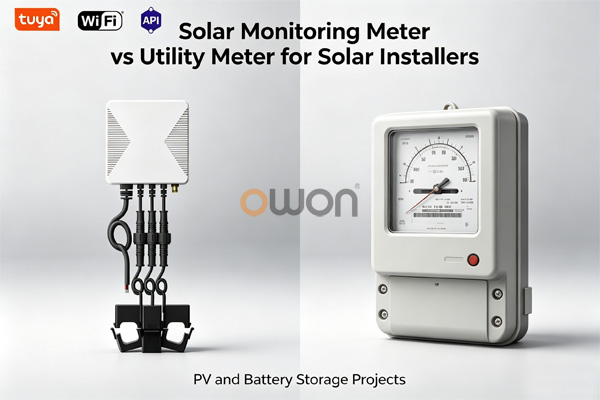
A solar monitoring meter provides real-time visibility into solar generation, grid import and export, battery charging behavior, and overall energy consumption. Understanding the difference between a solar monitoring meter and a utility meter helps installers design more effective and future-ready energy systems.
What Is a Utility Meter?
A utility meter is installed and managed by the local electricity provider.
Its primary purpose is billing.
Typical utility meter functions include:
- Recording electricity consumption
- Measuring imported electricity
- Supporting utility billing
- Meeting local metering regulations
While modern smart utility meters may provide limited consumption data, they are generally not designed for detailed solar monitoring or energy management applications.
Utility Meter Limitations for Solar Projects
For solar installers, utility meters often have several limitations:
- Limited real-time visibility
- No circuit-level monitoring
- Restricted access to data
- Limited battery storage integration
- No energy management functionality
As a result, utility meters alone are usually insufficient for customers seeking detailed energy insights.
What Is a Solar Monitoring Meter?
A solar monitoring meter is designed specifically for energy visibility and system optimization.
Unlike a billing meter, a solar monitoring meter focuses on monitoring energy flows throughout a PV system.
Typical monitoring functions include:
- Solar production monitoring
- Grid import and export monitoring
- Battery storage monitoring
- Whole-home energy monitoring
- Historical energy analysis
- Energy management system integration
For solar installers, these capabilities provide valuable information during commissioning, troubleshooting, and long-term system optimization.
Utility Meter vs Solar Monitoring Meter
Feature Comparison Table
| Feature | Utility Meter | Solar Monitoring Meter |
|---|---|---|
| Utility Billing | Yes | No |
| Solar Production Monitoring | Limited | Yes |
| Grid Import Monitoring | Yes | Yes |
| Grid Export Monitoring | Limited | Yes |
| Battery Storage Visibility | No | Yes |
| Whole-Home Energy Monitoring | No | Yes |
| Circuit-Level Monitoring | No | Available on some models |
| EMS Integration | No | Yes |
| Real-Time Monitoring | Limited | Yes |
| Installer Diagnostics | Limited | Yes |
The table highlights why many installers add a dedicated solar monitoring meter even when a utility smart meter is already present.
Why Solar Installers Prefer Dedicated Monitoring Solutions
Better Commissioning Visibility
During installation and commissioning, installers need immediate access to energy flow information.
A dedicated solar monitoring meter can help verify:
- PV generation
- Grid interaction
- Battery operation
- Load consumption
without waiting for utility data.
Improved Customer Experience
Homeowners increasingly want access to:
- Daily solar production
- Self-consumption performance
- Battery usage
- Electricity costs
A monitoring solution provides significantly more visibility than a standard utility meter.
Support for Energy Management Systems
Many modern PV projects now include:
- Home Energy Management Systems (HEMS)
- Battery storage
- Smart EV charging
- Load optimization
These applications rely on accurate real-time energy monitoring data.
Choosing the Right Solar Monitoring Meter
When evaluating a solar monitoring meter, installers should consider:
Bidirectional Measurement
The ability to measure:
- Grid import
- Grid export
- Solar production
is essential for modern PV projects.
CT Clamp Flexibility
CT clamp-based solutions simplify installation and are often preferred for retrofit projects because they can be installed without major wiring modifications.
Battery Storage Compatibility
Monitoring solutions should provide the energy flow visibility required for battery charging and discharging optimization.
Future EMS Integration
Projects increasingly require compatibility with:
- Energy management systems
- Building management systems
- Smart home platforms
- IoT monitoring platforms
Example Monitoring Solutions Used in Modern Solar Projects
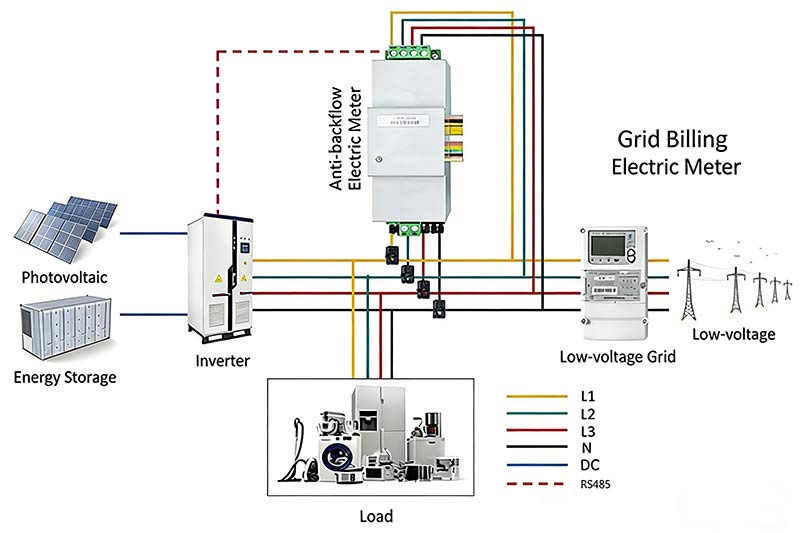
Today’s solar installers often deploy dedicated monitoring devices to complement utility meters and gain deeper visibility into energy flows throughout a property.
For example, the OWON PC341 Multi-Circuit Energy Monitor is designed for residential solar and energy management projects where understanding total consumption alone is not enough. In addition to monitoring solar production and grid import/export, it can monitor whole-home energy usage and up to 16 individual circuits, such as HVAC systems, lighting, receptacles, and other major loads. This level of visibility helps installers and homeowners identify where energy is being consumed and make more informed decisions about solar self-consumption and battery storage optimization.
Compared with a standard utility meter, a dedicated solar monitoring solution provides significantly more actionable information for both system commissioning and long-term energy management.
Solar Monitoring Trends Across Europe
Several trends are increasing demand for dedicated monitoring solutions:
| Trend | Why It Matters |
| Battery Storage Growth | Requires detailed energy flow monitoring |
| Rising Electricity Prices | Increases demand for energy visibility |
| Export Restrictions | Requires monitoring and control |
| Smart Home Adoption | Creates integration opportunities |
| Energy Management Systems | Depend on real-time data |
As these trends continue, dedicated monitoring devices are becoming standard components of modern solar projects.
Frequently Asked Questions
Do solar installers still need a solar monitoring meter if a utility meter is already installed?
In most cases, yes. Utility meters are designed for billing, while solar monitoring meters provide the detailed energy visibility required for PV optimization and energy management.
What is the difference between a solar monitoring meter and a solar energy meter?
The terms are often used interchangeably. Both generally refer to devices used to monitor solar generation and energy flows within a PV system.
Can a solar monitoring meter measure both solar production and grid consumption?
Yes. Modern monitoring solutions can track solar generation, grid import, grid export, and household energy usage simultaneously.
Is a utility smart meter enough for battery storage projects?
Usually not. Battery storage systems typically require more detailed real-time monitoring than utility meters provide.
What should installers look for when selecting a solar monitoring meter?
Key factors include bidirectional measurement, CT clamp flexibility, battery storage compatibility, and future EMS integration.
Conclusion
Utility meters and solar monitoring meters serve different purposes. While utility meters remain essential for electricity billing, dedicated solar monitoring solutions provide the visibility required to optimize solar production, battery storage performance, and overall energy efficiency.
For solar installers, understanding this distinction helps ensure that modern PV systems deliver both accurate monitoring and long-term value for customers.
Related reading:
[Bidirectional Energy Meter for Solar and Grid Monitoring (WiFi-Enabled Solutions)]
[Modbus Energy Meter Selection Guide for Solar, EMS and Industrial Applications]
Post time: Jun-06-2026