Introduction
A Zigbee2MQTT door sensor is a practical solution for building reliable local automation systems. By combining Zigbee wireless communication with MQTT-based integration, these sensors allow users to monitor door and window status and trigger automated actions without relying on cloud services.
For smart homes, hotels, offices, and commercial buildings, Zigbee door sensors provide valuable event information that can be used for security monitoring, HVAC optimization, lighting control, and occupancy-based automation.
This guide explains how Zigbee2MQTT door sensors work, how they connect with Home Assistant, how to set them up, and what to consider when selecting a reliable Zigbee sensor for automation projects.
What Is a Zigbee2MQTT Door Sensor?
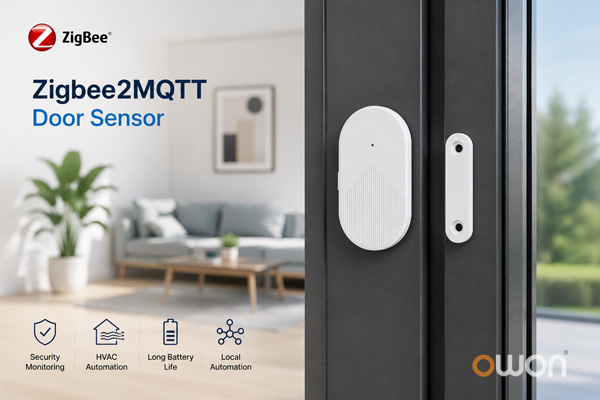
A Zigbee2MQTT door sensor is a Zigbee-based door or window sensor that communicates with automation platforms through the Zigbee2MQTT framework and MQTT protocol.
Most door sensors use a magnetic contact mechanism. The device consists of:
- A sensor unit installed on the door or window frame
- A magnetic component installed on the moving part
When the door or window opens, the magnetic connection changes, and the sensor sends an open/close status update through the Zigbee network.
A typical system includes:
Zigbee Door Sensor
↓
Zigbee Gateway / Coordinator
↓
Zigbee2MQTT
↓
MQTT Broker / Home Assistant
↓
Automation Actions
This architecture enables flexible local automation without depending on external cloud services.
Why Use Zigbee2MQTT for Door Sensors?
Compared with cloud-based smart devices, Zigbee2MQTT provides several advantages for automation projects.
Local Control
Zigbee2MQTT allows devices to communicate with local systems, improving reliability and reducing dependence on internet connectivity.
Flexible Integration
Because it uses MQTT communication, Zigbee2MQTT can connect with platforms such as Home Assistant and other automation systems.
Wide Device Compatibility
Zigbee2MQTT supports a wide range of Zigbee devices, making it easier to build customized automation systems.
Fast Event Response
Door sensors generate simple but important events. Local processing helps automation actions happen quickly.
How to Add a Zigbee Door Sensor to Zigbee2MQTT
The setup process is usually straightforward.
1. Prepare Your Zigbee Network
Before pairing, you need:
- A compatible Zigbee gateway or coordinator
- Zigbee2MQTT software
- MQTT broker
- Automation platform such as Home Assistant
2. Enable Pairing Mode
Enable device joining in Zigbee2MQTT.
For many Zigbee door sensors, resetting the device places it into pairing mode.
For example, the OWON DWS332 Zigbee door/window sensor uses a reset button and LED indicators to show network status. The device can be reset and added to a Zigbee gateway network before integration.
3. Complete Device Pairing
After pairing:
- Zigbee2MQTT discovers the sensor
- The device appears in the system
- Users can rename the sensor
- Automation rules can be created
Once connected, the sensor can report door and window open/close events in real time.
Common Zigbee2MQTT Door Sensor Automations
A Zigbee door sensor can trigger many useful automation scenarios.
Smart Security
When unexpected access occurs:
- Send notifications
- Trigger alarms
- Record activity events
Smart Lighting
When a door opens:
- Turn on entrance lights
- Activate room lighting scenes
HVAC Energy Saving
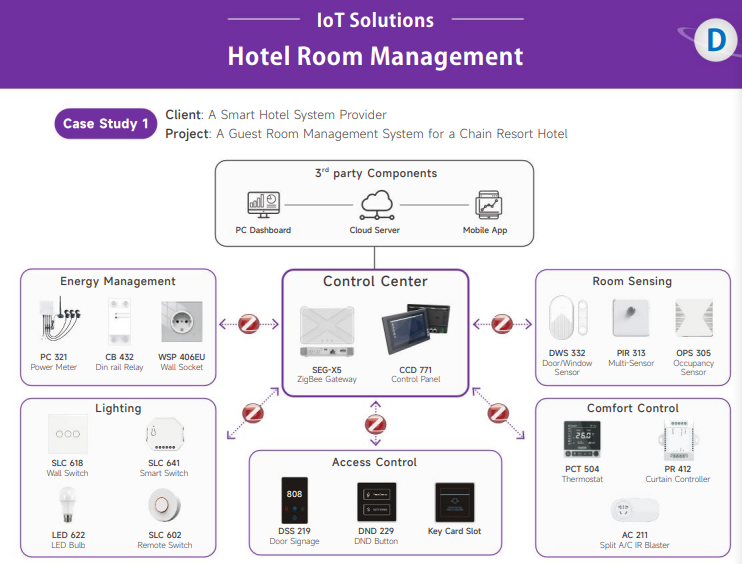
In hotels and commercial buildings:
- Detect open windows or doors
- Trigger HVAC adjustment
- Reduce unnecessary energy consumption
Occupancy Automation
Door status can also be combined with motion sensors or other devices to improve occupancy detection.
Zigbee Door Sensor Installation Considerations
Proper installation helps ensure reliable operation.
Important considerations include:
Sensor Alignment
The sensor and magnetic strip should be correctly aligned when the door or window is closed.
Installation Distance
The two parts should remain within the recommended detection range.
Secure Mounting
For commercial applications, screw mounting can provide better stability than adhesive-only installation.
The DWS332 supports secure screw installation and optional spacers for uneven mounting surfaces, making it suitable for different door and window installation conditions.
Choosing a Zigbee Door Sensor Compatible with Zigbee2MQTT
Not all Zigbee sensors provide the same experience in automation systems.
When selecting a Zigbee2MQTT door sensor, consider:
| Feature | Why It Matters |
|---|---|
| Zigbee 3.0 support | Better interoperability |
| Stable open/close reporting | Reliable automation triggers |
| Battery status reporting | Easier maintenance |
| Tamper detection | Improved security |
| Long product lifecycle | Suitable for commercial projects |
For example, commercial Zigbee door/window sensors such as the OWON DWS332 are designed for smart buildings, hotel automation, security systems, and IoT integration projects.
Applications of Zigbee2MQTT Door Sensors
Although popular among smart home users, Zigbee2MQTT door sensors are also suitable for professional automation projects.
Smart Hotels
Monitor guest room doors and windows to support:
- HVAC energy management
- Lighting automation
- Room status monitoring
Offices and Commercial Buildings
Support:
- Security monitoring
- Access activity tracking
- Building automation workflows
Apartments and Property Management
Enable:
- Remote monitoring
- Energy-saving automation
- Smart facility management
Zigbee2MQTT Door Sensor vs ZHA
Both Zigbee2MQTT and ZHA allow Zigbee devices to work with Home Assistant.
| Zigbee2MQTT | ZHA | |
|---|---|---|
| Integration method | MQTT-based | Native Home Assistant integration |
| Configuration | More advanced | Simpler setup |
| Best for | Flexible automation projects | Basic Home Assistant setups |
The right choice depends on project requirements and user preferences.
FAQ
What is a Zigbee2MQTT door sensor?
A Zigbee2MQTT door sensor is a Zigbee door or window sensor integrated through Zigbee2MQTT and MQTT, allowing local status monitoring and automation.
Can Zigbee2MQTT door sensors work with Home Assistant?
Yes. Zigbee2MQTT is commonly used with Home Assistant to create automation rules for security, lighting, HVAC, and occupancy management.
How do I put a Zigbee door sensor into pairing mode?
Most Zigbee door sensors enter pairing mode after a reset operation. The exact process depends on the device manufacturer.
Do Zigbee door sensors need internet access?
No. One advantage of Zigbee2MQTT is local communication between Zigbee devices and automation platforms.
Are Zigbee2MQTT door sensors suitable for commercial buildings?
Yes. With Zigbee mesh networking and local automation capabilities, they can support applications such as hotels, offices, apartments, and smart building projects.
Conclusion
A Zigbee2MQTT door sensor provides a reliable foundation for local automation by combining Zigbee wireless technology with flexible MQTT-based integration.
From smart security and lighting control to HVAC energy management, these sensors provide valuable real-time information for both residential and commercial automation systems.
For professional deployments, selecting Zigbee 3.0 devices with reliable reporting, secure installation options, and long-term manufacturing support helps ensure stable and scalable automation solutions.
About OWON Technology
OWON Technology is an OEM and ODM manufacturer specializing in Zigbee IoT devices, smart building automation, HVAC control, and energy management solutions. With experience in connected device development and manufacturing, OWON provides Zigbee sensors, gateways, thermostats, and smart control products for system integrators, IoT brands, and commercial projects worldwide.
Related reading:
[Zigbee Motion Sensor for Home Assistant: Integration Guide for Smart Automation Projects]
Post time: May-27-2026


