Introduction
As solar adoption continues to accelerate across Europe, installers are increasingly expected to deliver more than just PV panel installation. Homeowners and businesses now demand detailed energy visibility, battery storage optimization, export limitation control, and long-term energy management capabilities. For this reason, selecting the right solar energy meter has become a critical part of every PV project. A modern solar power meter can provide real-time monitoring of energy consumption, solar generation, grid import and export, and battery charging behavior. It also enables future integration with energy management systems and smart home platforms. This guide explains how solar installers can evaluate different energy monitoring solutions and select the most suitable meter for residential and commercial PV and storage projects.
Why Solar Installers Need More Than a Basic Energy Meter
Traditional utility meters are designed primarily for billing purposes. While they can measure electricity consumption, they typically provide limited visibility into solar production, battery storage performance, and real-time energy flows. Modern solar installations require additional functionality, including:
- Real-time solar production monitoring
- Grid import and export measurement
- Battery storage optimization
- Anti-export and zero-export control
- Whole-home energy visibility
- Historical energy analysis
- Integration with energy management systems
Without these capabilities, installers may struggle to deliver the level of monitoring and control that customers increasingly expect.

Key Factors When Selecting a Solar Energy Meter
Bidirectional Energy Measurement
One of the most important features for solar projects is bidirectional measurement. A bidirectional energy meter can separately track:
- Electricity imported from the grid
- Electricity exported to the grid
- Solar energy production
- Net energy consumption
This functionality is especially important for self-consumption optimization, battery storage control, and export limitation applications.
Compatibility with PV and Battery Storage Systems
Many modern residential projects combine solar generation with battery storage. Installers should select energy meters capable of supporting:
- Hybrid inverter systems
- Battery storage platforms
- Energy management systems
- Export control strategies
Accurate energy flow data allows storage systems to make smarter charging and discharging decisions.
Single-Phase and Three-Phase Support
European installations vary significantly. Some projects use:
- Single-phase residential systems
- Three-phase residential systems
- Commercial three-phase systems
Selecting a flexible meter platform simplifies project deployment and reduces inventory complexity.
Whole-Home Energy Visibility
Many homeowners now want to understand how individual loads affect overall energy consumption. Advanced monitoring solutions can provide:
- Main grid monitoring
- Solar production tracking
- Circuit-level consumption analysis
- Appliance-level energy visibility
This information helps improve energy efficiency and customer satisfaction.
Anti-Export and Export Limitation Capability
In some European regions, utilities restrict the amount of solar energy that can be exported to the grid. Installers may therefore require monitoring solutions that support:
- Zero-export control
- Export limitation strategies
- Relay-based control systems
- Energy storage integration
Recommended Owon’s Energy Monitoring Solutions for Solar Installers
PC321 WiFi Solar Energy Meter
The OWON PC321 is designed for residential and commercial solar monitoring applications. It uses external CT clamps for non-intrusive installation, allowing solar installers to monitor energy flows without major wiring modifications.
Key advantages include:
- Single-phase, split-phase, and three-phase support
- Bidirectional energy measurement
- Solar production and grid monitoring
- Real-time voltage, current, power factor, and frequency monitoring
- Selectable CT clamps from 80A to 1000A
- Suitable for PV and battery storage projects
Its flexible CT-based design makes it particularly suitable for installers seeking a single monitoring solution across different residential and commercial solar projects.
PC341 WiFi Multi-Circuit Energy Monitor
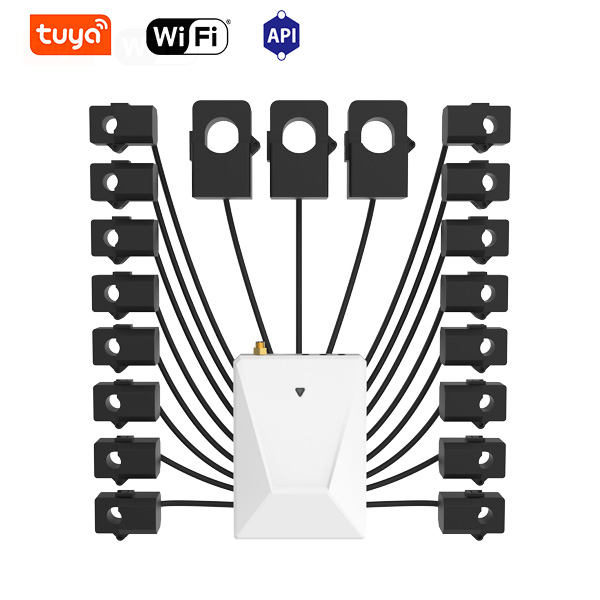
For projects requiring deeper energy visibility, the OWON PC341 provides both whole-home and circuit-level monitoring. It combines main CT clamps with additional sub-CTs, allowing installers to monitor solar generation and multiple branch circuits simultaneously.
Key advantages include:
- Whole-home energy monitoring
- Up to 16 branch circuit measurements
- Solar production monitoring
- Bidirectional energy measurement
- Main CT and sub-CT architecture for granular visibility
- Residential and light commercial applications
This solution is ideal for larger homes, apartments, and energy management projects where understanding circuit-level consumption is just as important as monitoring solar production.
PC473 WiFi DIN Rail Energy Meter with Relay
Some solar projects require active export control or automated load management. The OWON PC473 combines CT clamp-based energy monitoring with relay control functionality, making it suitable for both monitoring and control applications.
Key advantages include:
- Bidirectional energy monitoring
- Three-phase compatibility
- Selectable CT clamps from 80A to 750A
- Integrated 16A dry-contact relay
- Export control applications
- Energy storage integration support
This makes it suitable for solar and storage projects requiring both accurate energy measurement and relay-based control logic.
Feature Comparison Table
| Project Type | Recommended Solution | Main Benefit |
|---|---|---|
| Residential Solar PV | PC321 | Flexible bidirectional monitoring |
| Solar + Battery Storage | PC321 | Import/export visibility |
| Whole-Home Monitoring | PC341 | Main load and circuit-level monitoring |
| Zero Export Projects | PC473 | Monitoring and relay control |
| Small Commercial Solar | PC321 | Three-phase energy monitoring |
| Apartment Solar Projects | PC341 | Multi-circuit visibility |
Solar Monitoring Trends Across Europe
Several trends are shaping the future of residential and commercial solar installations:
| Trend | Impact on Meter Selection |
| Growth of battery storage | Requires bidirectional monitoring |
| Higher self-consumption targets | Requires detailed energy visibility |
| Export restrictions | Requires anti-export solutions |
| Smart energy management | Requires real-time monitoring |
| Whole-home optimization | Requires multi-circuit monitoring |
As these trends continue, energy monitoring is becoming a standard component of modern solar projects rather than an optional upgrade.
Frequently Asked Questions
What is the best solar energy meter for PV installers?
The best solution depends on the project requirements. Installers typically prefer energy meters that support bidirectional measurement, battery storage integration, and real-time monitoring.
What is the difference between a solar energy meter and an energy monitor?
A solar energy meter focuses on measuring energy flows related to PV generation and grid interaction, while an energy monitor may provide broader visibility into household or facility energy consumption.
Why is bidirectional energy measurement important?
Bidirectional measurement allows installers and homeowners to track both imported and exported electricity, which is essential for solar self-consumption and battery storage optimization.
Can one energy meter monitor solar production and household consumption?
Yes. Modern solar energy meters can simultaneously track solar generation, grid import/export, and total household consumption.
Which energy monitoring solution is best for battery storage projects?
Installers generally choose solutions that support bidirectional measurement and provide accurate energy flow data for battery management systems.
Conclusion
Choosing the right solar energy meter is no longer just a technical decision. For today’s solar installers, energy monitoring plays a critical role in project performance, customer satisfaction, and future energy management capabilities. Whether the project involves residential PV, battery storage, export limitation, or whole-home monitoring, selecting a solution with accurate bidirectional measurement and scalable monitoring capabilities can help deliver long-term value for both installers and end users.
Related reading:
[Solar Inverter Wireless CT Clamp: Zero-Export Control & Smart Monitoring for PV + Storage]
[Modbus Energy Meter Selection Guide for Solar, EMS and Industrial Applications]
Post time: Dec-15-2025